2026
Xyh Fonts
design
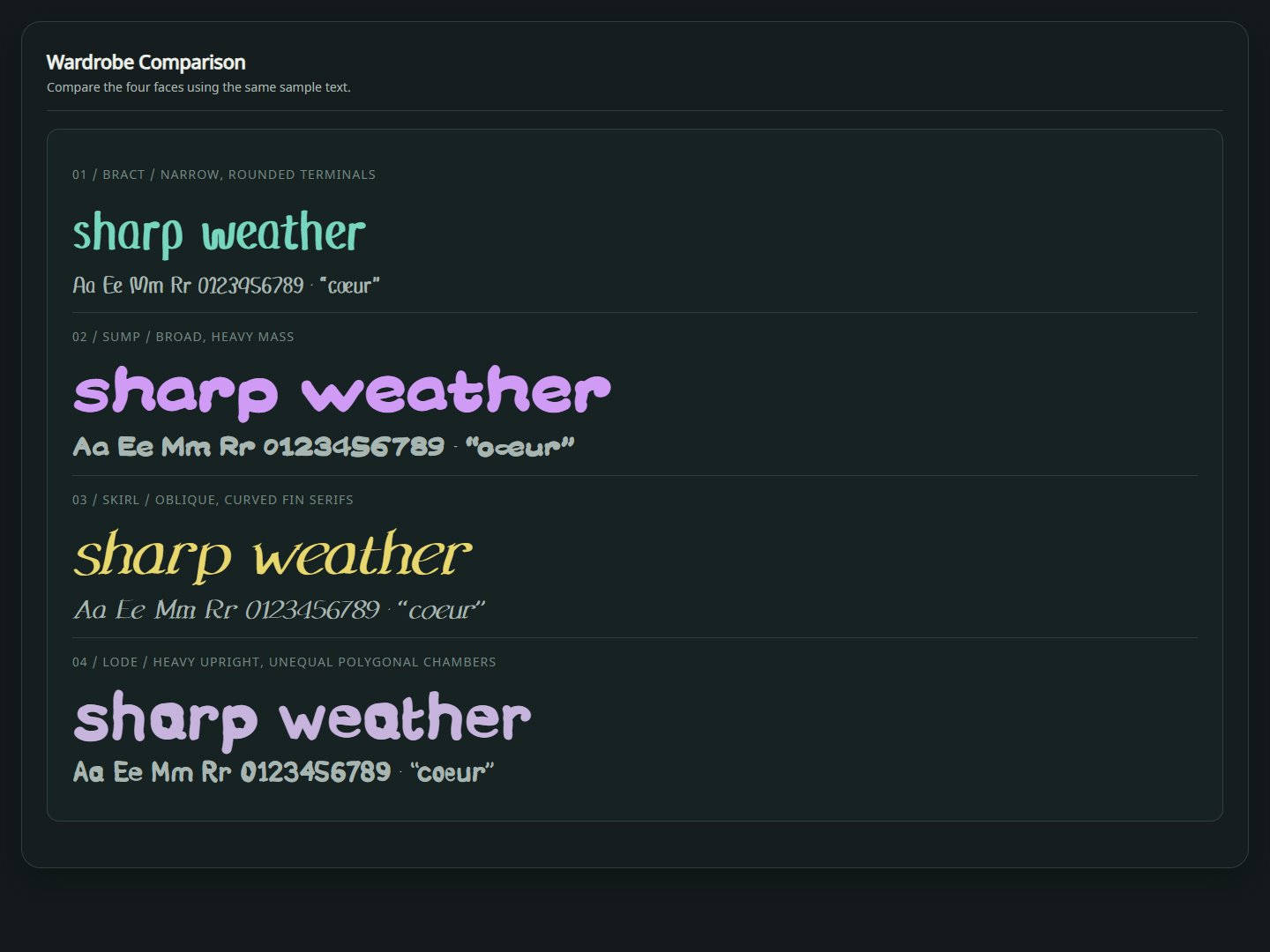
Four original Latin display typefaces: narrow Bract, broad Sump, oblique Skirl, and heavy upright Lode with unequal polygonal chambers. Each maps 346 codepoints with accents, mark stacking, fitted spacing, and four contextual states. The collection includes an interactive specimen and downloadable TTF, WOFF, and WOFF2 files.
2026
Harvests Happen
visual
intermedia
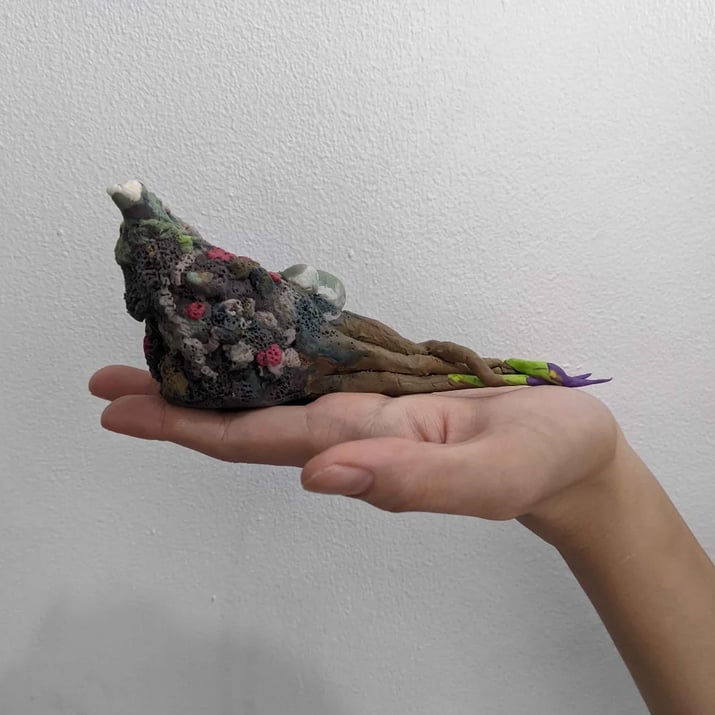
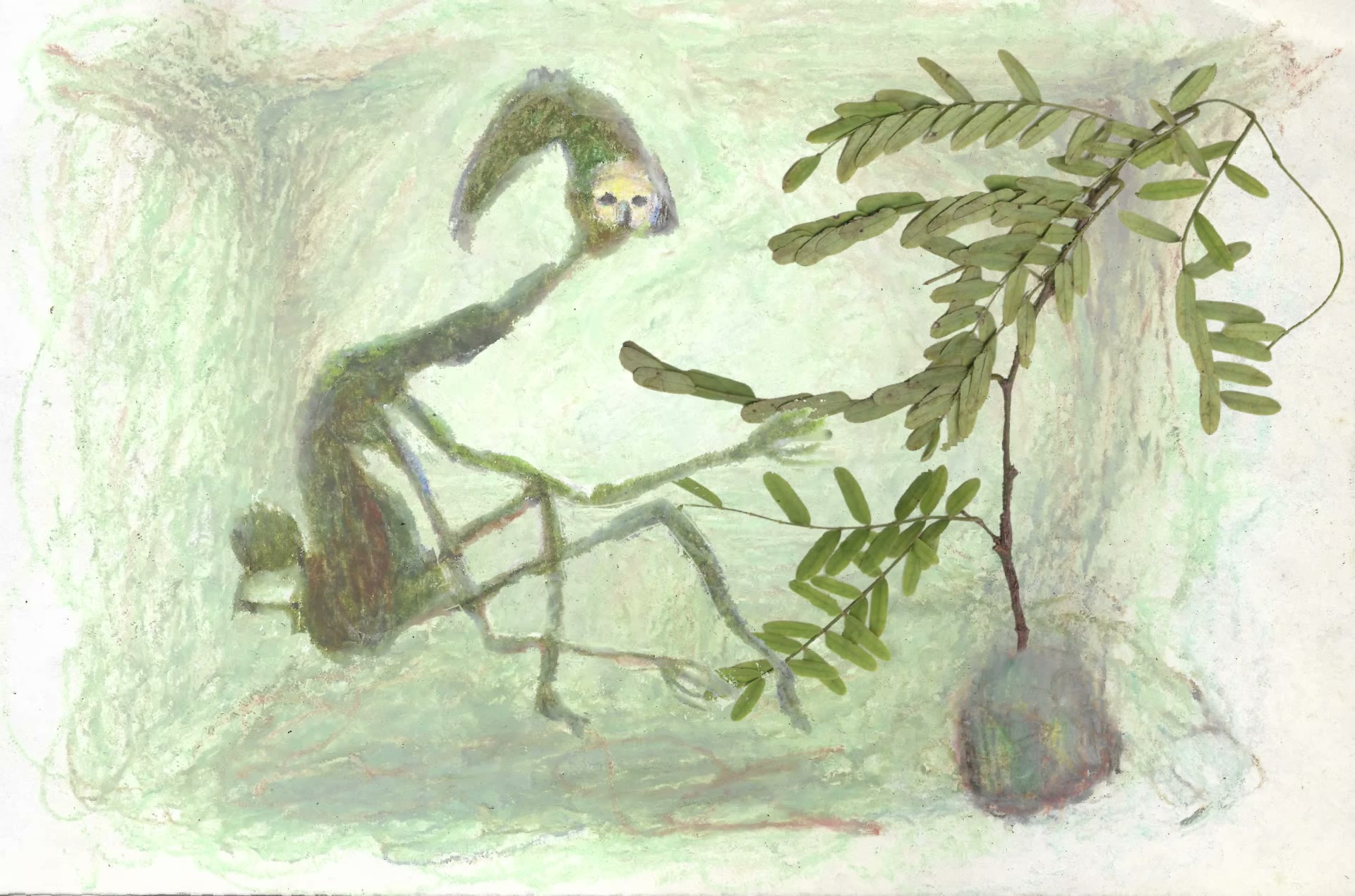
An animated oil pastel drawing of a goblin sitting on a stool in a green room beside a pressed plant growing from a rock, breathing and fidgeting while paper insects and fish pass through. The drawing is redrawn live eight times a second and loops every 15 seconds in sync with comfy synth music in 19-tone equal temperament.
2026
Five Ways Through
intermedia
games
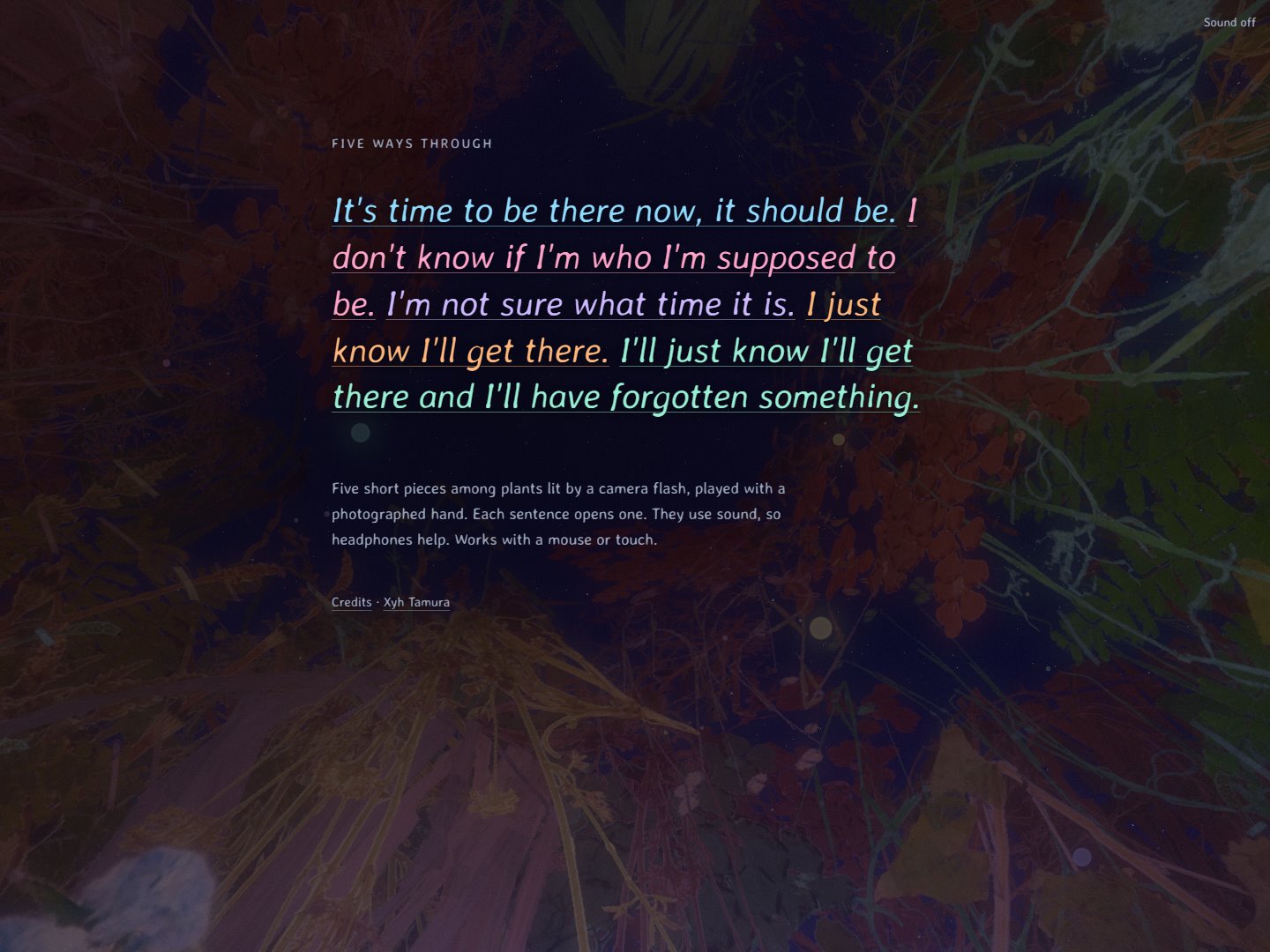
Five short interactive browser pieces, one for each sentence of a five-sentence text, set in a field of plants at night, by day, and in coloured dark. Lit by an on-camera flash and played with a photographed hand, the pieces combine herbarium specimens and rigged cutouts moving in the wind, with a septimal synth and field recordings.
2026
Fashion Hour Omnipresence
intermedia
film
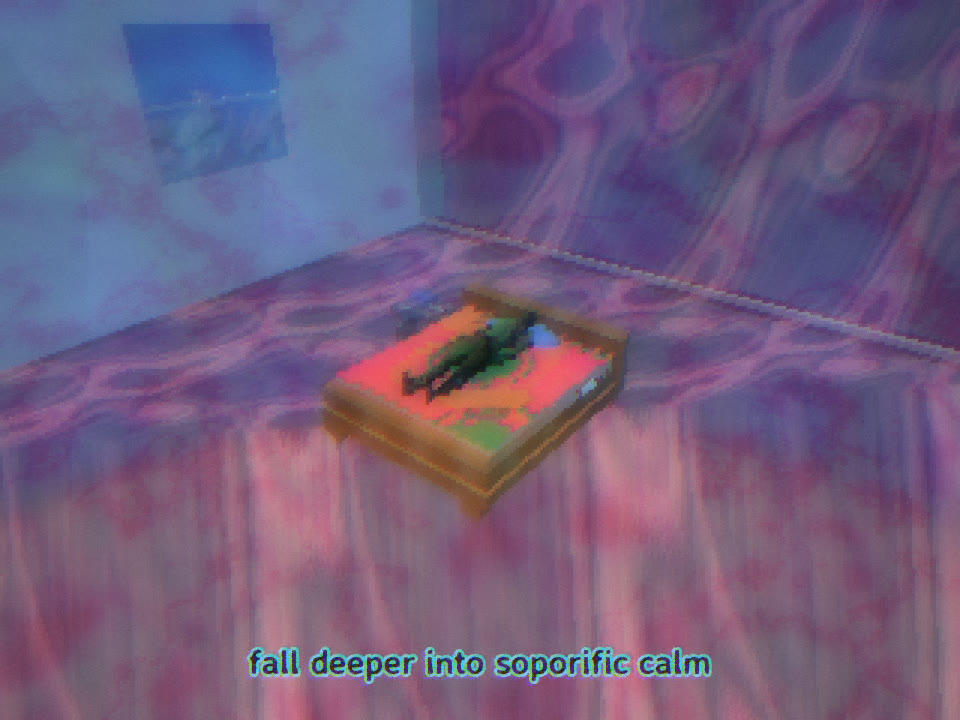
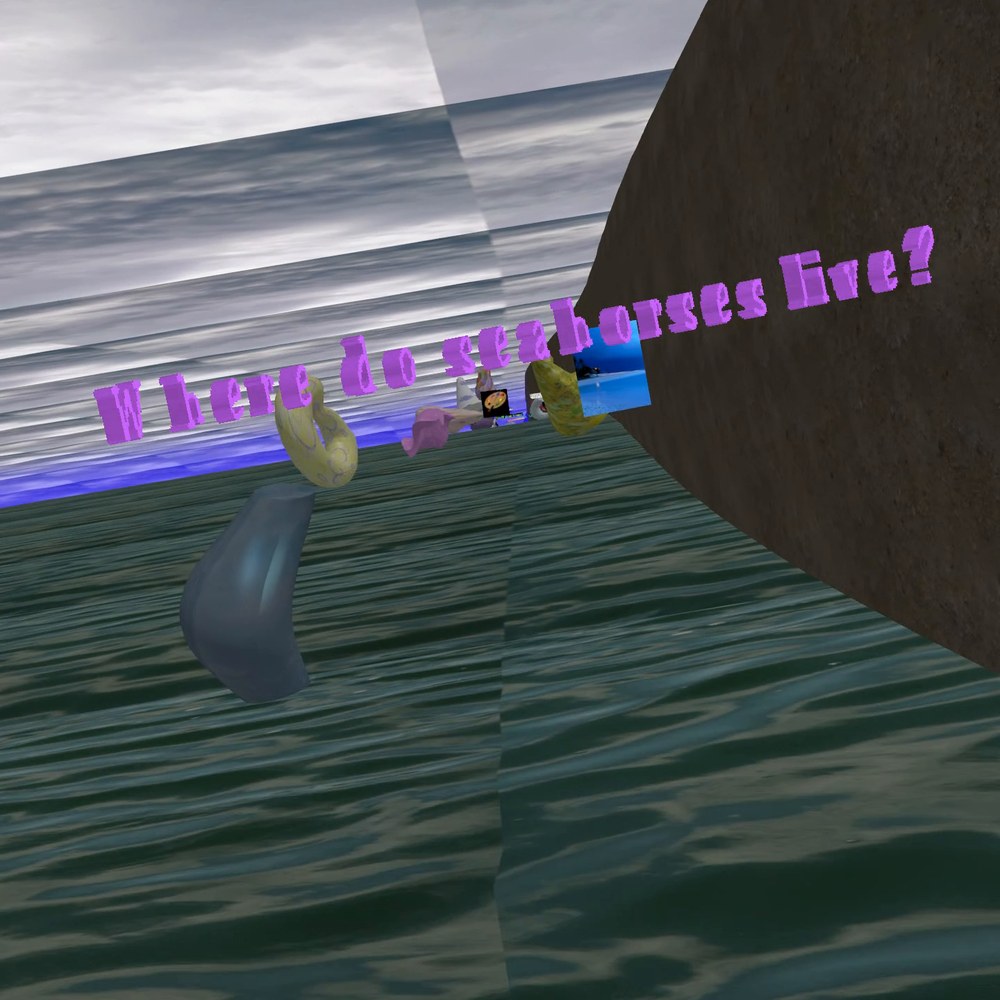
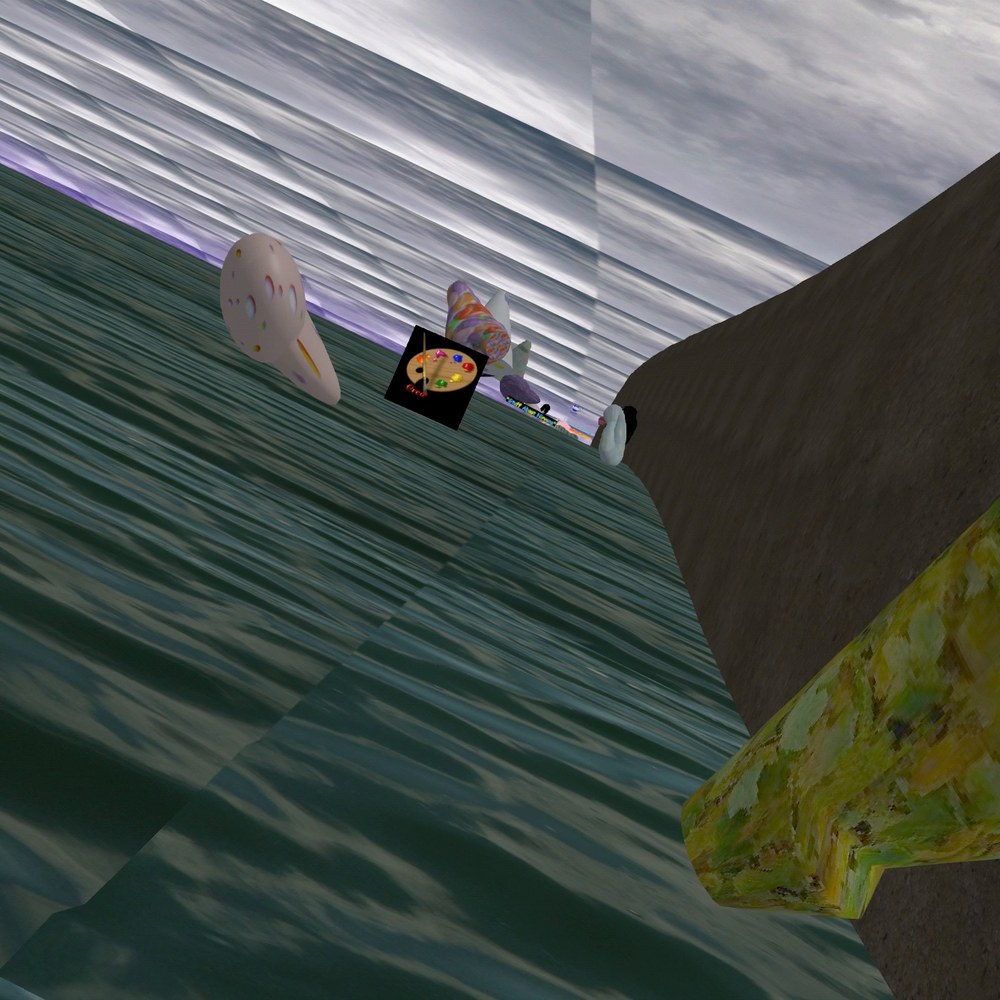
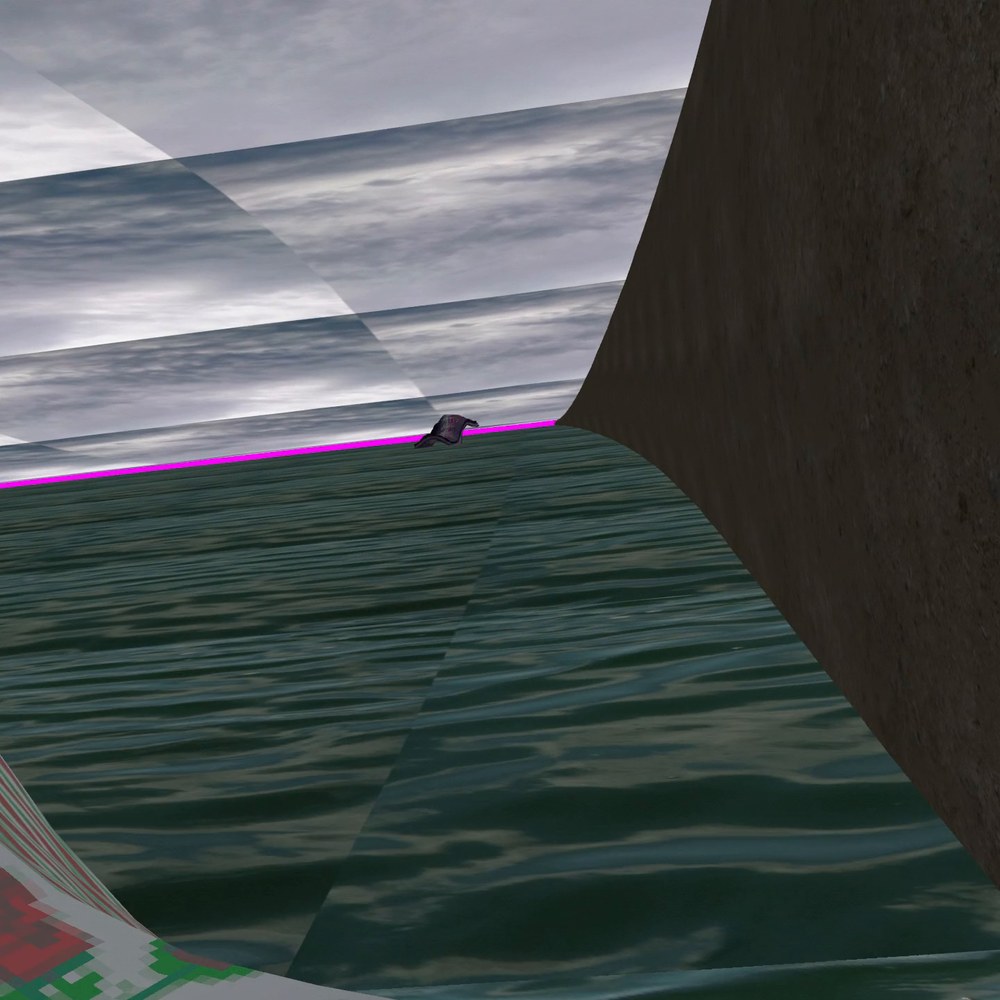
A 17.5-second videopoem in procedural 3D graphics contemplating early internet life. The camera travels through a space bounded by a cloud ceiling, rippling ocean, and sand wall, passing warped non-Platonic solids and eight animated graphics from the early web that assemble into a found image-text poem. The rendering reproduces the material artifacts of mid-90s consumer 3D (affine texture mapping, vertex snapping, and 5/6/5 colour under an ordered Bayer dither), scored to a synthesized, EQ-dampened classic-rock ballad intro with IDM elements, and accompanied by a companion poem in its video caption.
2026
Foam Green City
intermedia
games
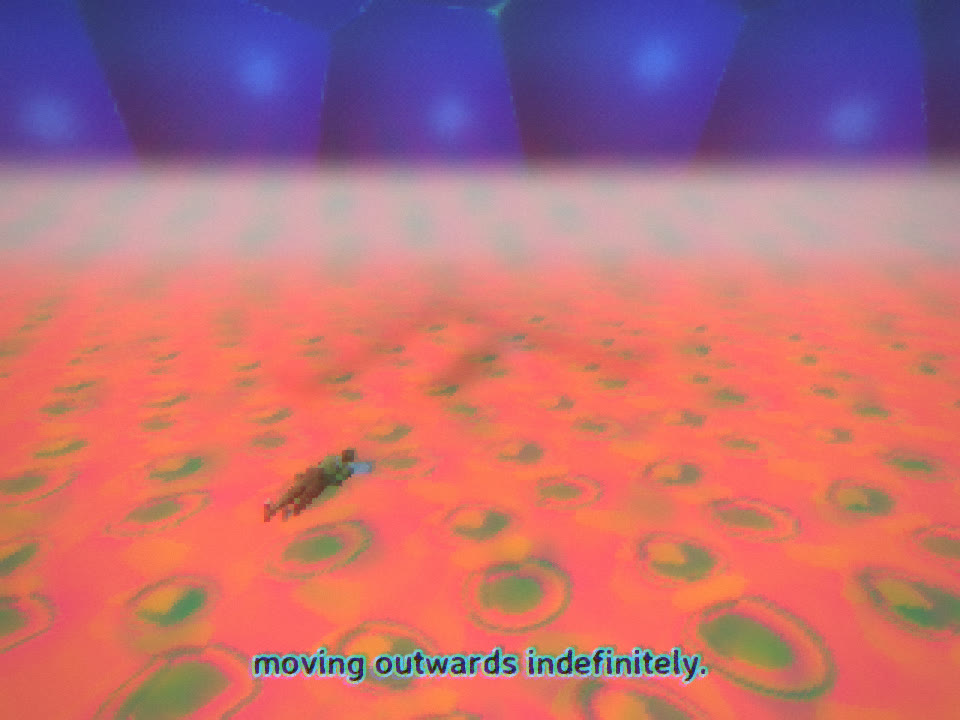
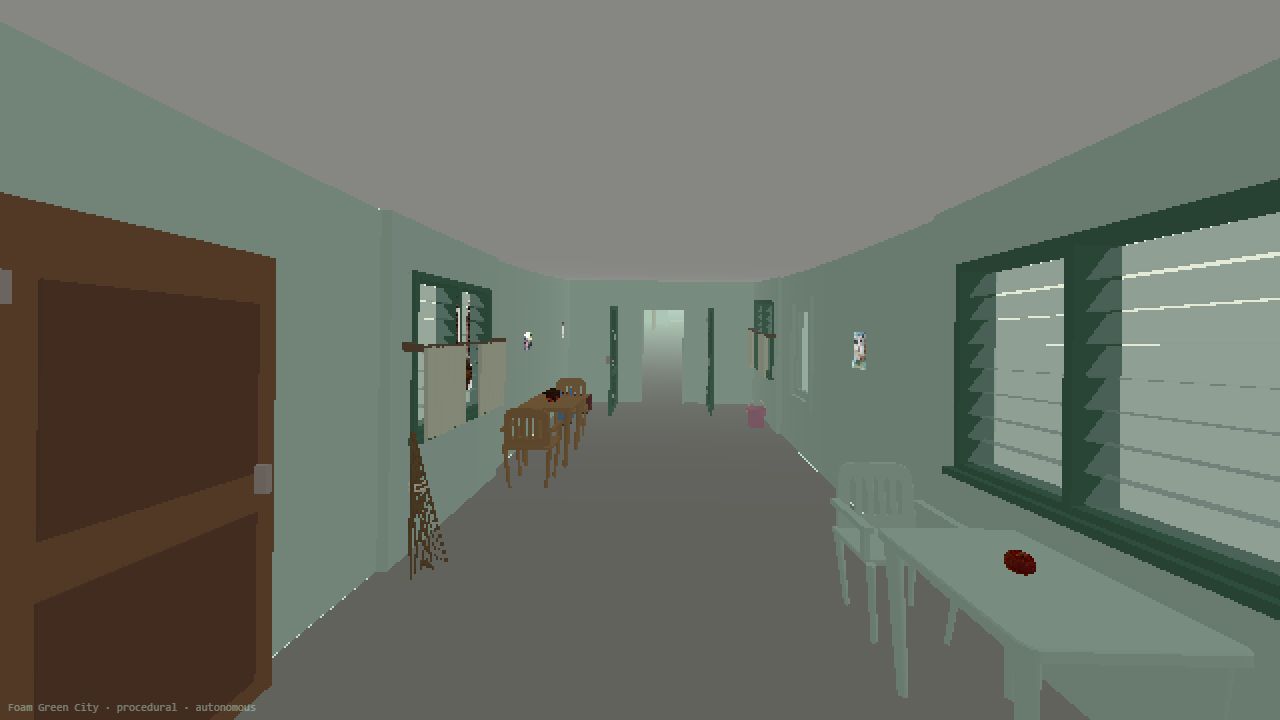
An autonomous browser-based 3D walkthrough of a procedurally arranged Filipino domestic interior. Foam-green walls, small family photos, modest furniture, and household objects recur along a slow, curving and twisting route with automatic or WASD movement, interrupted by occasional vast spaces, covered basketball courts, and open-air roofing-sheet walkways.
2026
Drawing the Hours
games
music
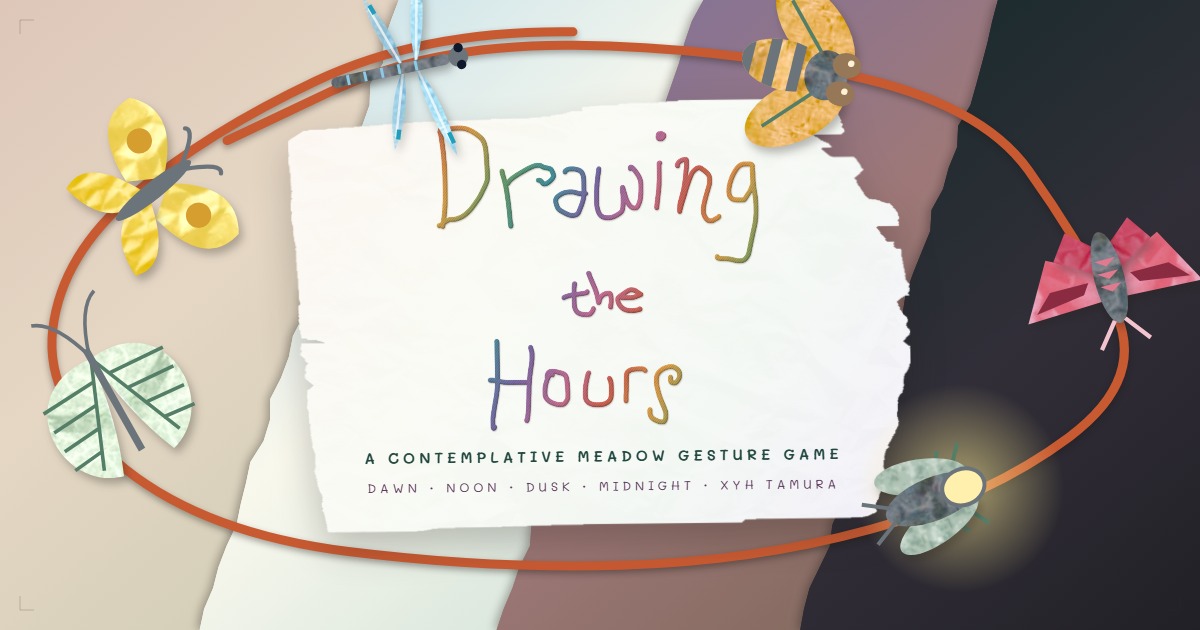
A tablet and browser meadow gesture game where the player draws with continuous cord loops and strokes among moving garden inhabitants. Successive visits across four quiet hours (morning, noon, dusk, and midnight) introduce combinatorial stroke interactions, enclosed loops, multi-pocket separations, length-based colour changes, and environmental hazards on a tactile paper playfield.
2026
Catchment
games
sci-comm
A particle-catcher arcade game and physical detector panel driven by Particle Data Group physics tables. Particles fall through a magnetic field where charge determines curvature and momentum sets the bend radius. Players steer a detector aperture across three quantum-number channels—charge (colour), parity (fill), and spin (shape)—absorbing matching particles into a six-slot detector stack where real decay lifetimes, matter-antimatter annihilation, pair production, and nuclear binding govern reactions before pile-up. Neutrinos pass as missing energy, free quarks hadronize into jets, and an in-game model card documents experimental provenance versus play idealizations.
2026
a landline imagining a line probe during a storm
music
intermedia
An algorithmic sound piece that performs its own score in the browser, drawing a seed, duration, and storm per visit. A telephone line degrades across the performance while a modem attempts connection; each attempt synthesises ITU-T Recommendations (V.8 answer tone, V.34 line probe, V.21 capability exchange) directly from published definitions, measures the subscriber loop channel, and negotiates transmission rates in real time as weather worsens.
2026
Unbounded Organ
techintermediaresearch-art
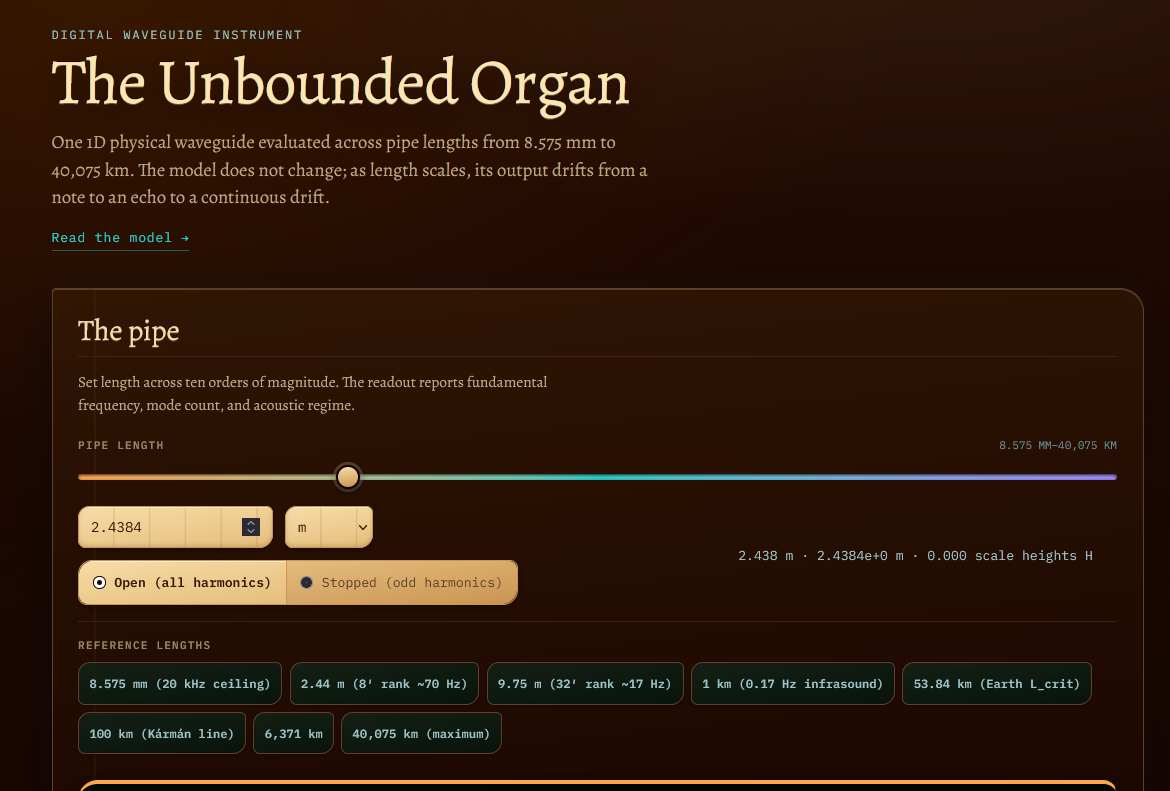
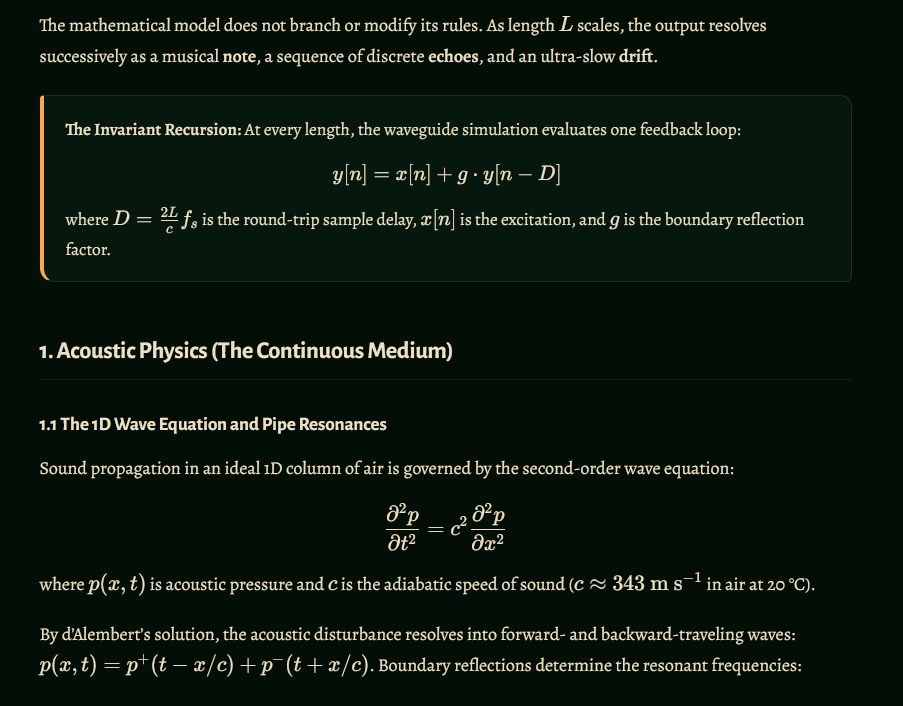
A digital waveguide instrument and pipe organ model evaluated without range restriction, spanning pipe lengths from 8.575 mm to 40,075 km and rendered at its true rate. The same 1D physical waveguide specification produces three distinct acoustic categories as mode density increases: a musical note at human scale, a diffuse echo across kilometres, and a continuous ultra-slow drift at planetary scale.
The model compares the physical atmosphere's acoustic cutoff frequency \(f_a = \gamma g / (4\pi c)\) against digital medium constraints (sample rate, delay-line memory state, and 4 GiB WAV RIFF boundary), measures frequency-dependent fractional-delay interpolator inharmonicity, renders non-realtime offline audio, and exports reproducible Markdown scores.
Accompanied by the practice-led research paper Composition Without Audition, which argues that computational specifications of physical acoustics can be complete as musical compositions without phenomenal audition, locating the work in executable models and medium constraints rather than in audible sound alone.
2026
Lamp for Stilling the Sun
tech
A browser light instrument with adjustable 4–18 Hz flicker, frequency drift, duty-cycle jitter, brightness, color temperature, and masks. Optional network seeding and camera feedback are off by default.
2026
Element Projections
tech
research
sci-comm
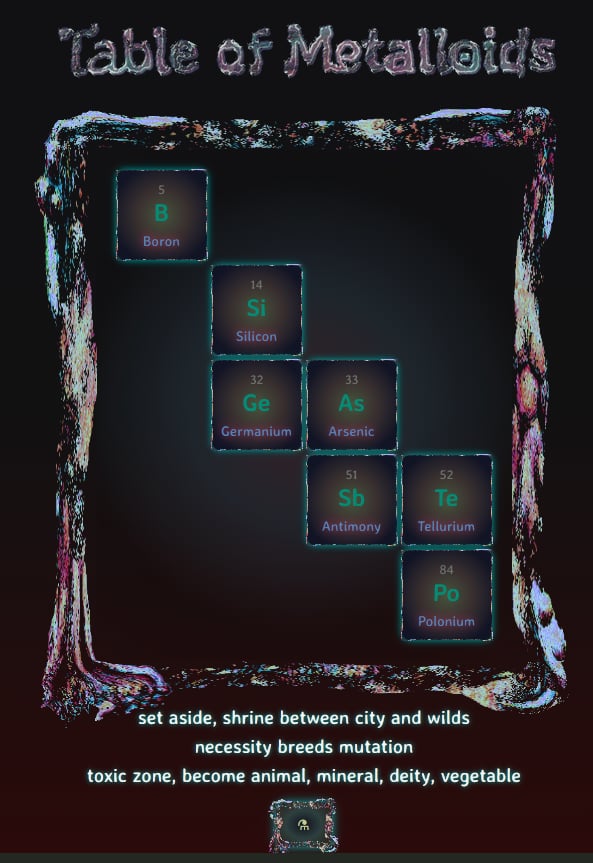
An interactive exploration of the periodic table of chemical elements as a two-dimensional projection of multidimensional property space. Formulates every layout as a pair of (ordering key, wrap rule), allowing users to switch between classical tables, chemical property PCA (Besalú 2013), Mendeleev number scales, and Archimedean spirals while measuring residual displacement vectors, Sneath atypicality, and topological neighborhood preservation.
2026
Desiderata
music
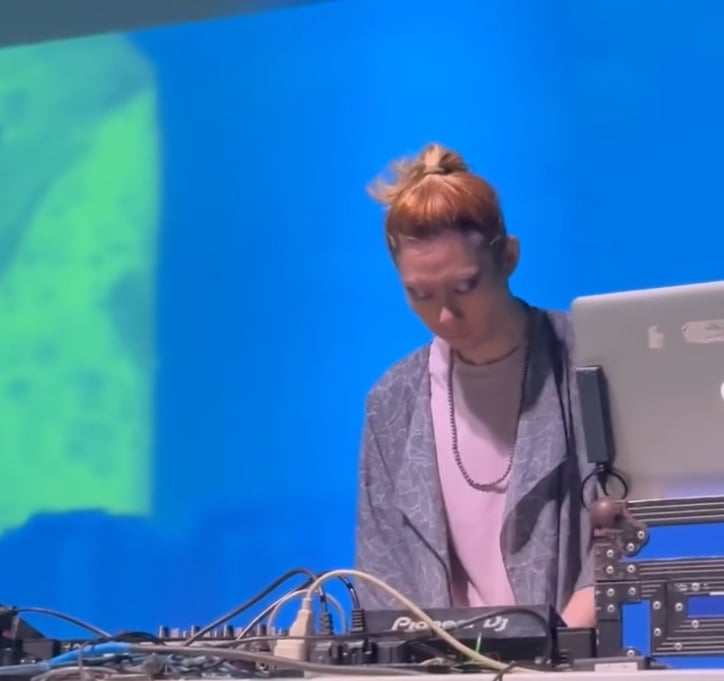
Selected for The Wrong Eclipse · The Wrong Biennale · online, 12 August 2026 · curated by David Quiles Guilló
Drone ambient made purely from manipulated voice and breath. Microtonally vocoded with oceans and insects, layered, stretched, recorded in odd places, and sampled (including speech synthesis) to produce a cyborg flesh-scape.
2026
Ombak Lock
games
An acoustic tuning puzzle game picked by ear, where zero-beat is failure. Grounded in Balinese gamelan's ombak (paired tuning where nominal unison shimmers with cultivated beating), the player must match target beat rates and depth across three multi-tone tumblers without allowing any two frequencies to reach unison.
2026
plica
intermedia
games
plica is an interactive generative collage built as an indefinitely unfolding sheet of paper. An artist-curated bank of themes and language seeds live searches for text and images, which are combined with procedural graphics, typography, blank space, and transformative effects. These are pulled from keyless public APIs (Wikipedia, Datamuse, PoetryDB, and Wikimedia Commons).
2026
Stanzuary
tech
A browser-based 3D text editor for writing and arranging text as spatial objects. Users can style fragments and move, rotate, or extrude them in three dimensions, then export the view as a transparent PNG or exchange the scene as Stanzuary JSON or portable .tabota events.
2026
W2XDX
tech
An experimental television instrument that threads a luminance field along six space-filling scan curves, transmits the resulting waveform through a phenomenological multipath atmosphere, then recovers sync and reconstructs the picture. The same delayed echo becomes a raster ghost, Hilbert blur, or scattered snow because each standard maps one-dimensional signal time to two-dimensional space differently.
2026
Benzaiten
tech
A WebGL video synthesiser driven by a live 2D fluid and magnetohydrodynamic simulation. Its velocity field warps procedural colour fields, uploaded media, or camera input across five solver regimes—including Navier–Stokes, viscoelastic shear, and induction-driven magnetic current sheets—under interactive touch and multi-band audio control.
Includes Ganymede, a WebGL image-warping tool with animated noise fields, lens distortion, and audio reactivity.
2026
CUTLINE
intermedia
An open generative poetry deck assembled live from outside language. Each draw queries keyless sources, cuts retrieved fragments into a poem, builds a collage from public image searches, and returns its synthesized title to the deck; operator cards can replace, reinterpret, return, mash, or skip cards in the reading.
2025–26→
Sgueltch
tech
research-art
A software suite built on the observation that digital errors inherit the geometry of the systems that fail. Its tools replace raster rows, codec blocks, and fixed glyph metrics with blobs, Voronoi territories, filaments, wet fields, or independent vectors, so corruption can seep, spread, and decay.
CyberScotoma
A video effect in which noised Voronoi regions stop refreshing their source pixels, continue to advect under optical flow, and accept content from a later frame or a second clip. This combines the visual-field shape of a scintillating scotoma with acausal, non-macroblock datamosh.
Pixel Lesions
Pixel sorting confined to expanding lichen-, mycelium-, dendrite-, or slime-mold-shaped regions. Growth topology replaces the raster row or column as the sorting path.
SiltCRT
A shader that replaces the regular RGB-triad lattice with silt cells, Gaussian bodies, or weighted Voronoi territories; a block grid remains as a control. Geometry and signal memory vary independently, combining dry refresh, remanence, or advected wet feedback with turbulence, chromatic bleed, Kawase bloom, and subtractive Umbra.
Gurgulator
A browser-based granular resynthesizer tuned for gurgling sounds. It turns a loaded sample into irregular pitch bends, time warps, overlapping bursts, and filter movement, then feeds the result through convolution reverb.
TypeBojangler
A text renderer that treats each character as an independently perturbed vector object. Seeded controls vary size, rotation, spacing, baseline, color, opacity, blur, breathing, and chromatic ghosts; users can load OTF or TTF fonts and export SVG or PNG.
Syncytium
A video effect and generative tissue engine in which cell colonies grow outward under a metric derived from an image's structure tensor. Instead of inking contours, cell walls pool inside anatomical compartments, and Lag Graft samples past or future donor frames while membranes follow the present.
goopCodecs
2026→ · set
Browser-based codecs and native file formats built for databending. Ooid stores Gaussian blobs, Scute stores Voronoi territories, Vermis stores samples along a Hilbert filament, and Urumizuri stores a wet-state ink matrix; byte or text edits therefore deform those structures instead of exposing a conventional raster or block codec.
ooid (.ooid)
A layered anisotropic Gaussian blob still and video format.
scute (.scute)
A warped Voronoi-cell image codec built from scattered seed coordinates.
vermis (.vermis)
A continuous space-filling Hilbert-thread image codec using DPCM color deltas.
urumizuri (.urumizuri)
A wet-state snapshot codec storing Bakezuri's fluid ink matrix as byte-editable material data.
2025–26→
Hindcasts
tech
A suite of offline audio and video effects that process a static file as a complete span. Whole-file access allows an effect to respond before an event, filter in both temporal directions, measure across passes, and optimize against the file's full distribution.
Remanence
A model of magnetic print-through for audio and video. Mapping a complete clip onto a wound reel lets adjacent wraps exchange amplitude or image content, producing pre-echo, post-echo, drift, wear, and VHS bleed with WAV or WebM export.
Metachamber
An offline reverb that maps each event's release-to-next-onset gap, then fits or ducks its tail to the available span. The next event's level supplies masking credit, so inaudible spill need not be suppressed.
Pythia
An acausal granular delay and sidechain processor that reads both files before rendering. A control signal supplies a future amplitude envelope; a source signal supplies pristine taps or grains, with negative delay, lookahead ducking, tempo-synced time, feedback, pitch, and pan controls.
Sounder
An offline dynamics processor that measures the file's amplitude distribution and maps it to a drawn transfer curve. The RMS window moves continuously from sample-level waveshaping to whole-file normalization.
Prolepsis
A video feedback field computed across a complete clip. Future and past frames can feed the current frame, producing trails before events and symmetric zero-phase wakes; rendered frames are cached for immediate scrubbing.
Horn of Plenty
A stationarizer that analyzes a finite sound, redistributes selected grains across time, and renders a statistically even texture long enough to sample without an audible loop.
2026→
Anexacta
tech
A set of equation-first synthesizers that expose spectral structure, tuning, modulation, and feedback as editable mathematics.
Aliquoto
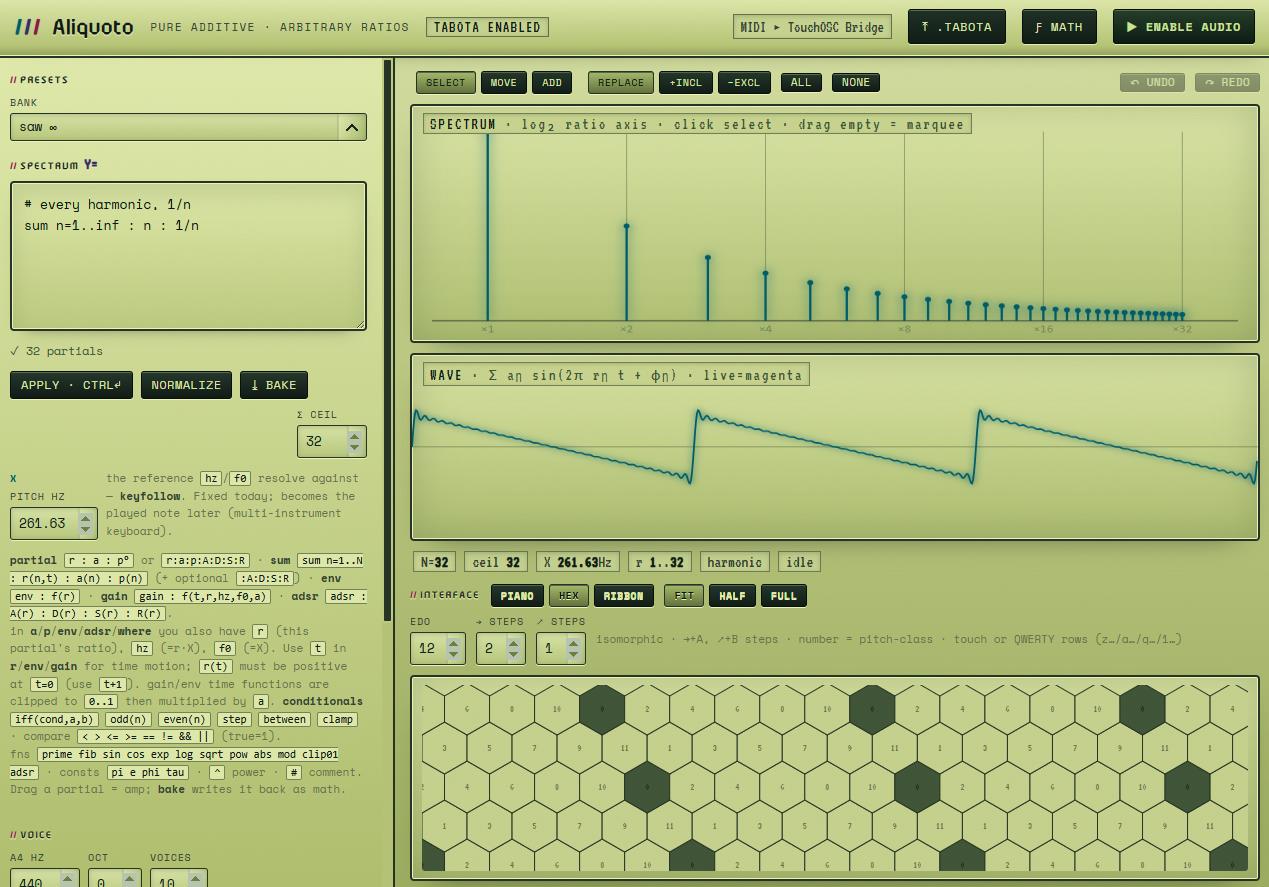
A pure additive synthesizer for writing spectral series as summations, envelopes, and conditionals. Its offline equation parser and phase-exact AudioWorklet support fractional, irrational, subharmonic, and drift-modulated partial ratios.
Cella
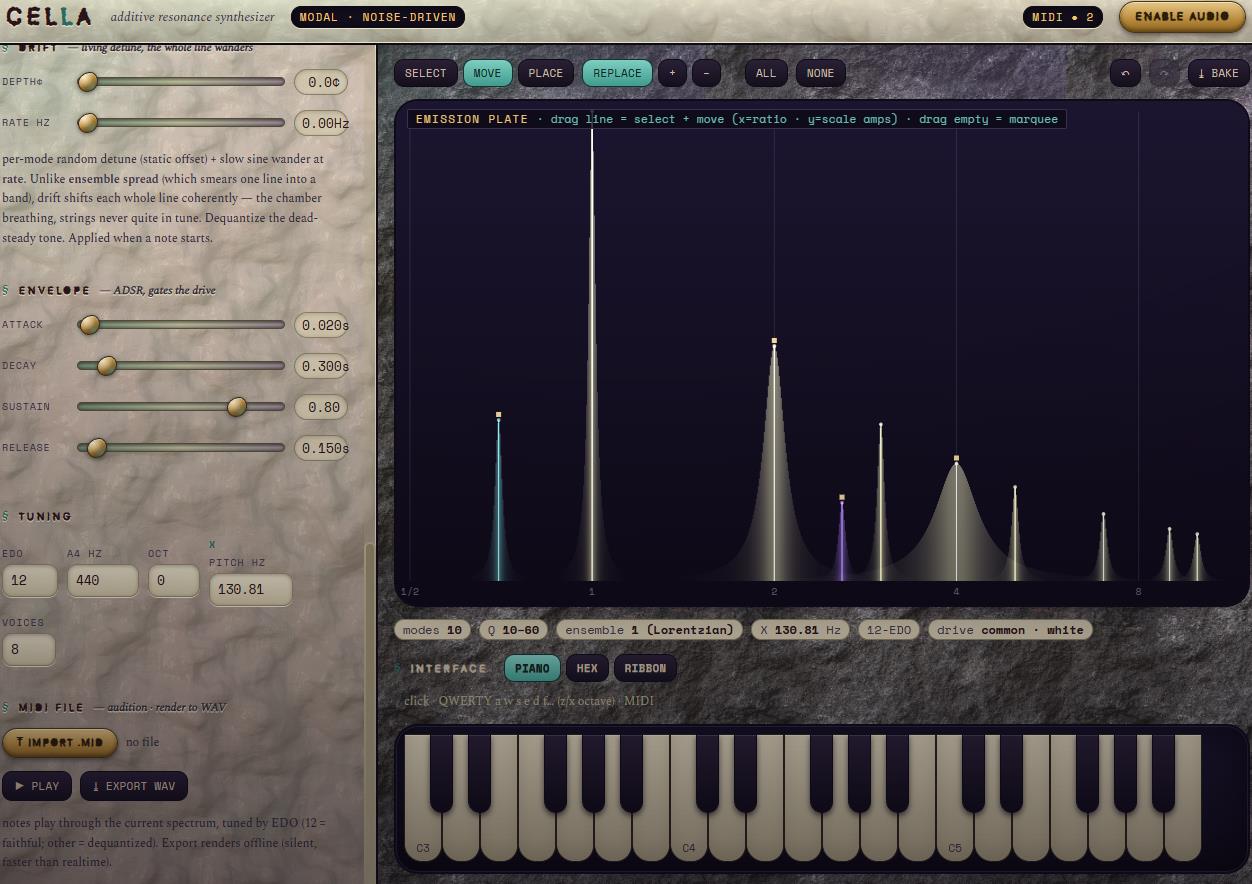
A resonant additive synthesizer that maps custom equations onto a noise-driven resonator bank, with painted partials, Gaussian, Lorentzian, or Voigt spectral distributions, microtonal macro-detuning, and offline WAV rendering.
Moire
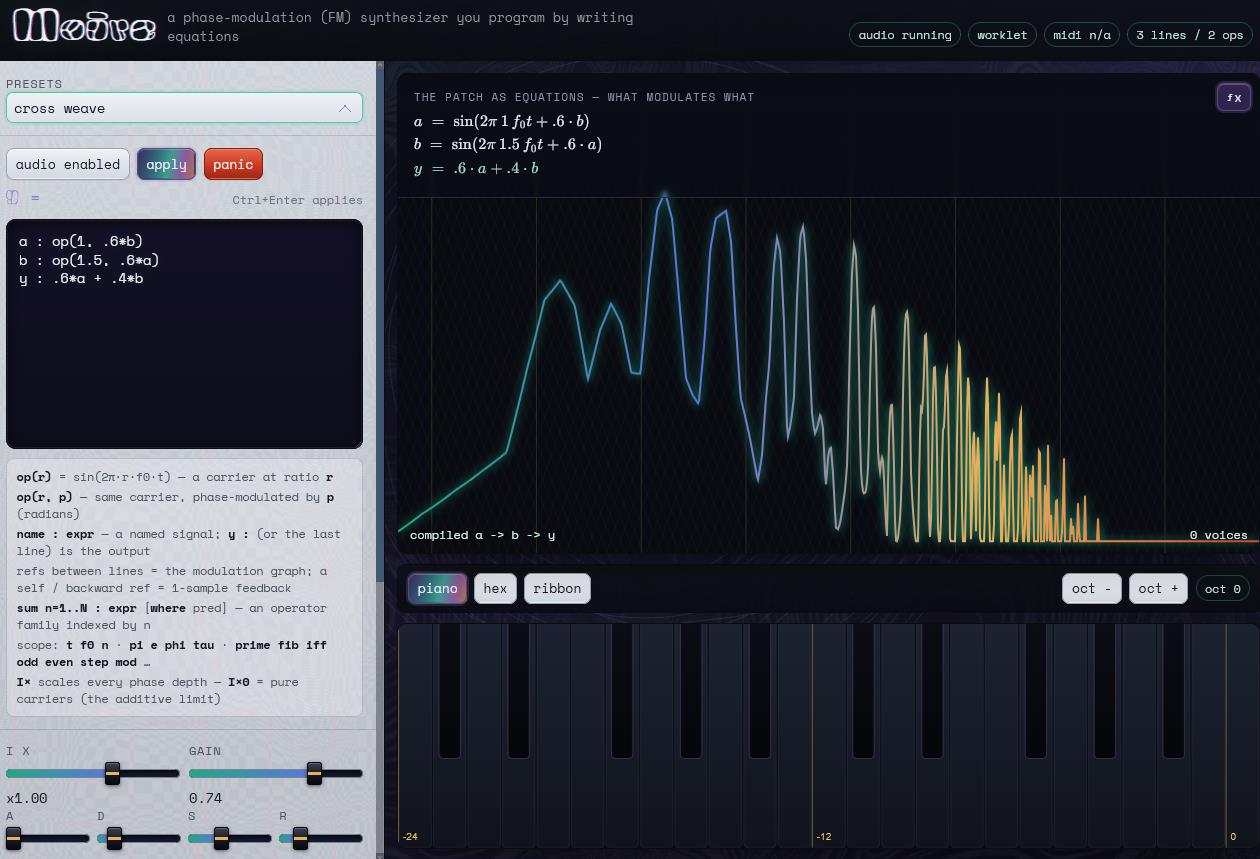
A phase-modulation synthesizer that replaces box-and-wire algorithm charts with live equations, arbitrary operator graphs, feedback loops, continuous drift, and non-integer ratios.
Physa
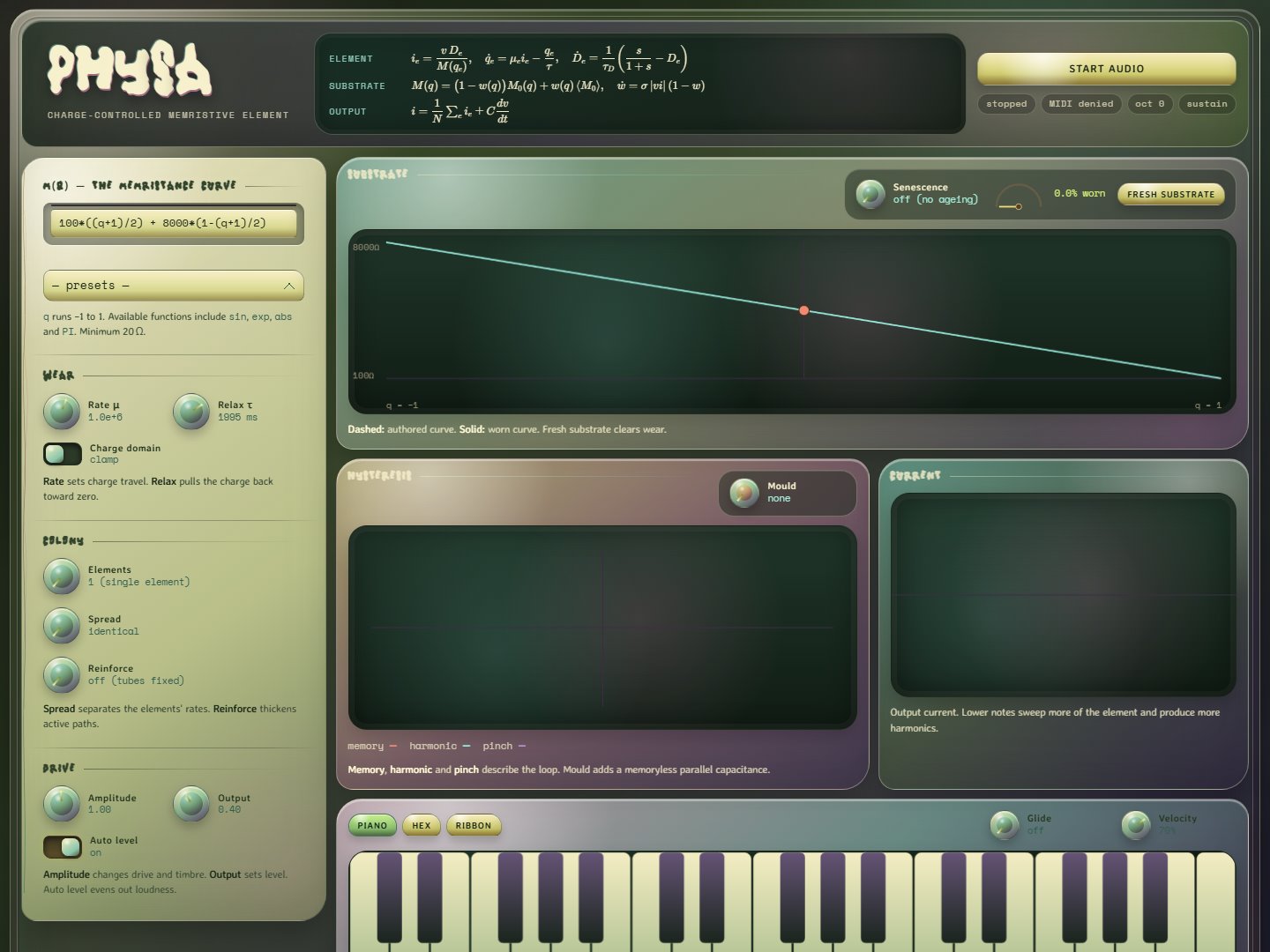
A stateful charge-controlled memristor synthesizer and vocal processor inspired by biomemristor disputes. The element preserves drive history, wears as you play or speak through a constant-Q filterbank, and lets vocal formants and keyboard dynamics abrade the same physical resistance substrate.
2026
glitterizer
tech
A procedural glitter painter and loop generator. Painting over an image writes low-resolution density, flow, focus, and tint fields; particles are derived deterministically from a seeded PRNG. Pluggable kits interpret focus as attention density or circle-of-confusion, while output profiles control palette quantization, Bayer/Floyd–Steinberg dither, and frame rates for client-side PNG, WebM, and GIF export.
2026
Aeropane
tech
A WebGL simulator of light passing through frosted, fluted, or hammered glass. A progressive slice renderer combines height-map normals, distance-dependent blur, Fresnel reflection, and Beer–Lambert absorption; a Frutiger Aero interface exposes the optical model.
2026
DHuenut
tech
A hue-remapping editor that models color transforms as circle maps S¹ → S¹ on a torus. A spline with winding-degree controls drives HSL or OKLCH remapping; the tool visualizes the map on a projected torus and exports a 3D LUT.
2026
Gliese
tech
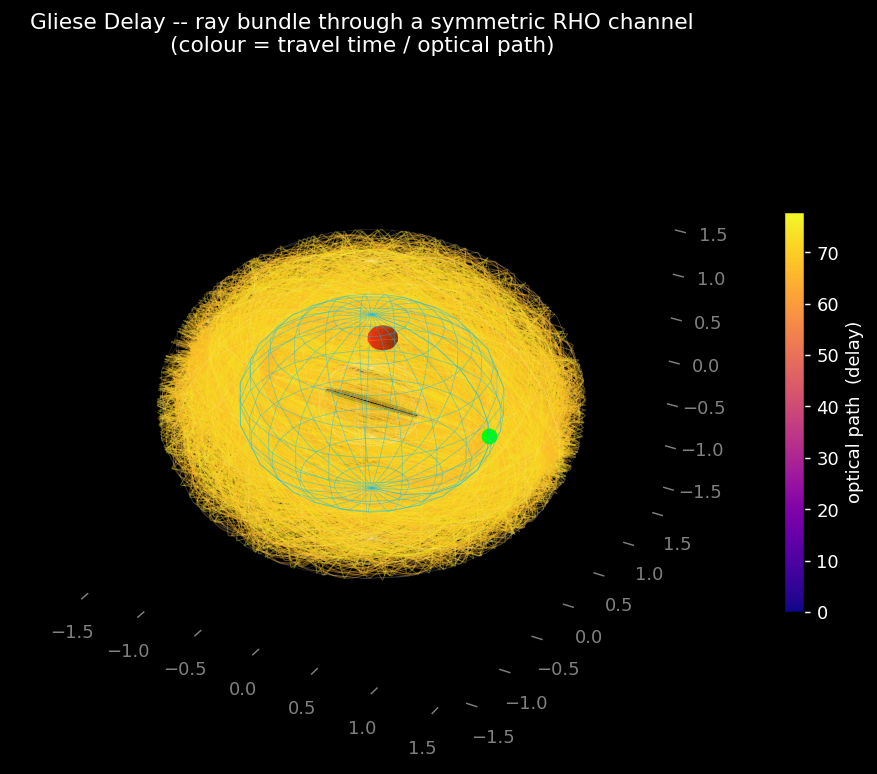
A multi-tap delay and reverb generator that derives tap times by ray-tracing sound through a spherically symmetric graded-index atmospheric channel. Users draft trajectories, inspect a 3D wavefront, and convolve stereo audio offline with the resulting tap set.
2026
Put Many Pictures Together
tech
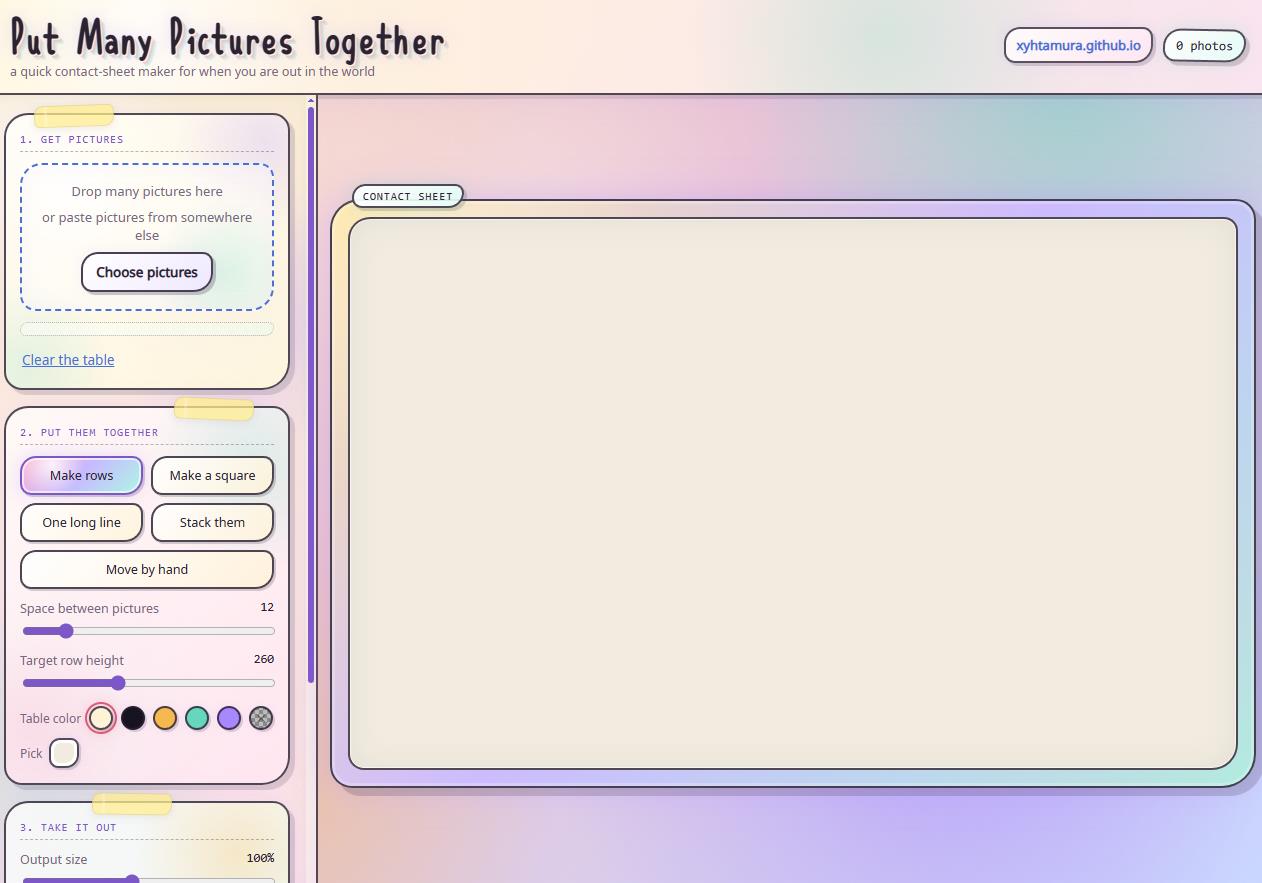
A drag-and-drop tool for arranging images into justified rows, grids, columns, or freeform collages, then copying the result or exporting a high-resolution layout.
2026
The Commitments of Physical Modeling: Timbre, Mediation, and Virtual Instrument Construction
research
International Conference on Timbre · presenter
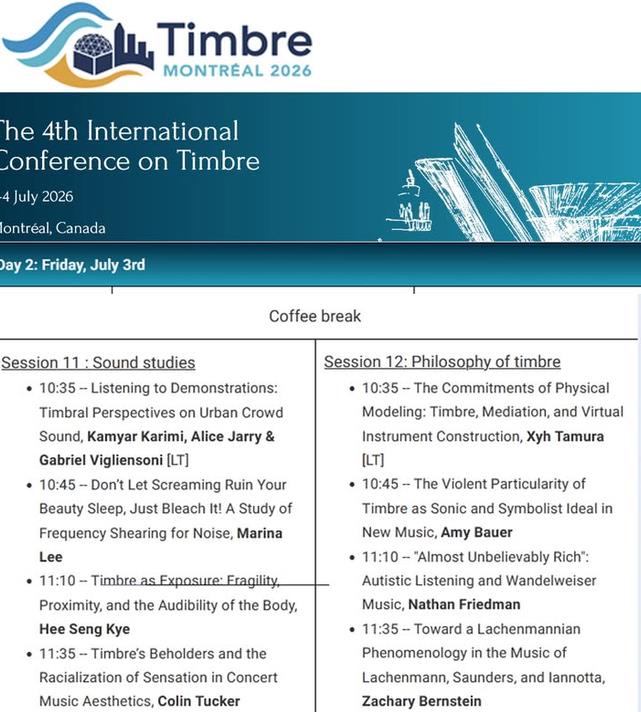
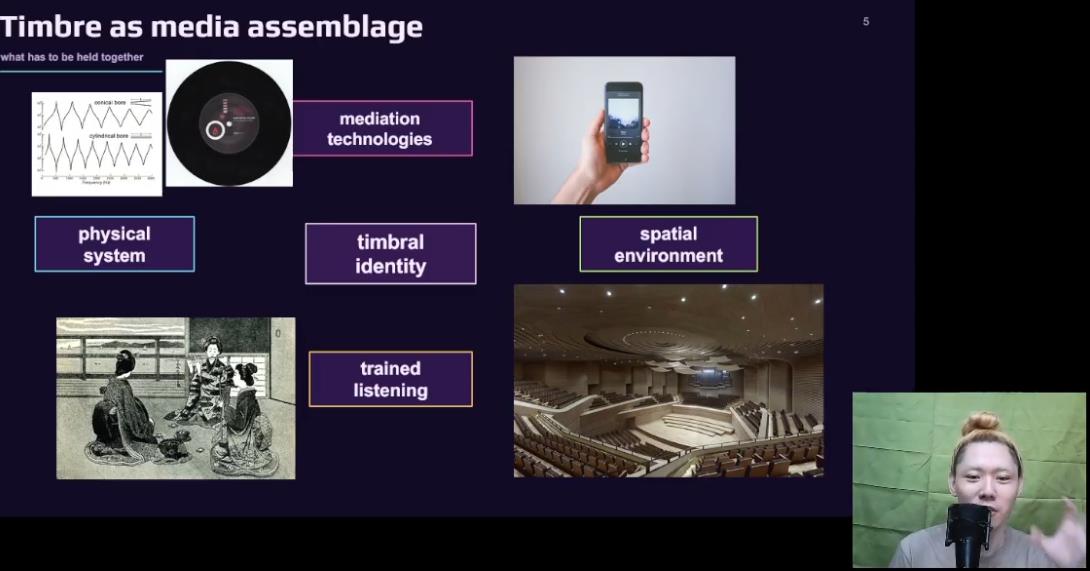
A paper arguing that physical modeling does not recover a fixed timbre from mechanism. Virtual instruments construct timbral identity by selecting materials, mediation, acoustic space, bodily cues, and assumed listening competencies; each design therefore commits to a particular account of what the instrument is and which parts of its sound matter.
2026
Bakezuri / 化け摺り
tech
A wet-print simulator that deposits quantized image separations into a shared field modeled on risograph printing and suminagashi. Inks bleed, repel, fix, and misregister; .bakezuri stores the process recipe, while .urumizuri exposes the wet-state matrix for databending.
2026
cornerfit
tech
A zero-dependency JavaScript library and companion web tool that computes the largest safe content rectangle inside any CSS border-radius, including irregular per-corner elliptical radii. It returns the fitted frame, ready-to-use padding insets, and per-side maximum lengths, with full handling of percentage radii and the browser's overflow-clamp behavior.
2026
DriftHam
techintermedia
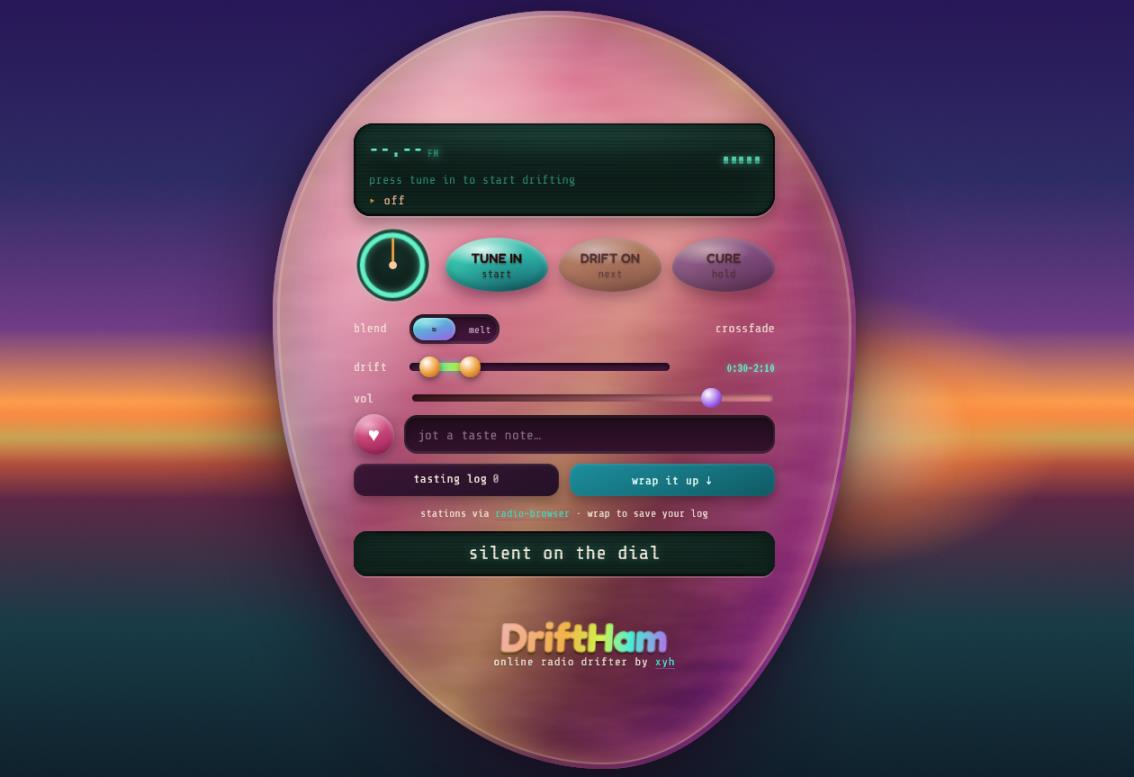
An internet-radio drift device that moves through live stations from the Radio Browser database, holding each for a randomized interval before crossfading or cutting onward. Listeners can hold or skip stations, annotate favorites, and export the session as a plain-text tasting log.
2025→
TaboTa Tabò-田
techresearch-art
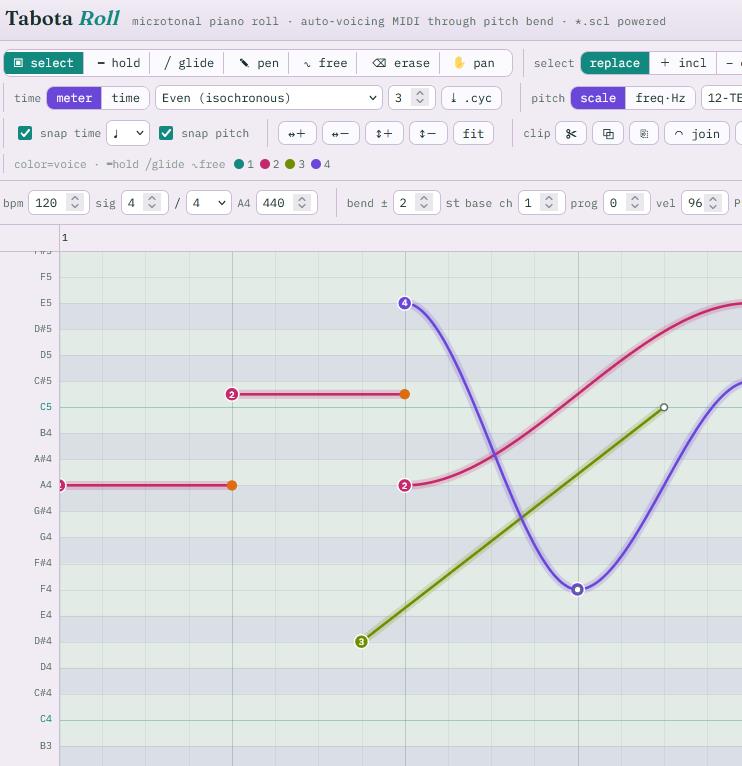
A post-MIDI composition tool and JSON notation for microtonal, polymetric, and time-based media. Its editors draw held tones, glides, pitch contours, and voice assignments; Cycla builds recursive subdivision grammars and exports .cyc time maps. TaboTa translates among beats, seconds, unordered cues, frequencies, categories, and instructions: where .scl files tune pitch, .cyc files tune time.
Binlod
A granular audio sampler and micro-textual grain engine built on the TaboTa shared core.
2026
A Comma Poem, after José García Villa’s “I, it, was, that, saw,” before the coming El Niño
intermedia
bio-art poem · digital interface & living punctuation
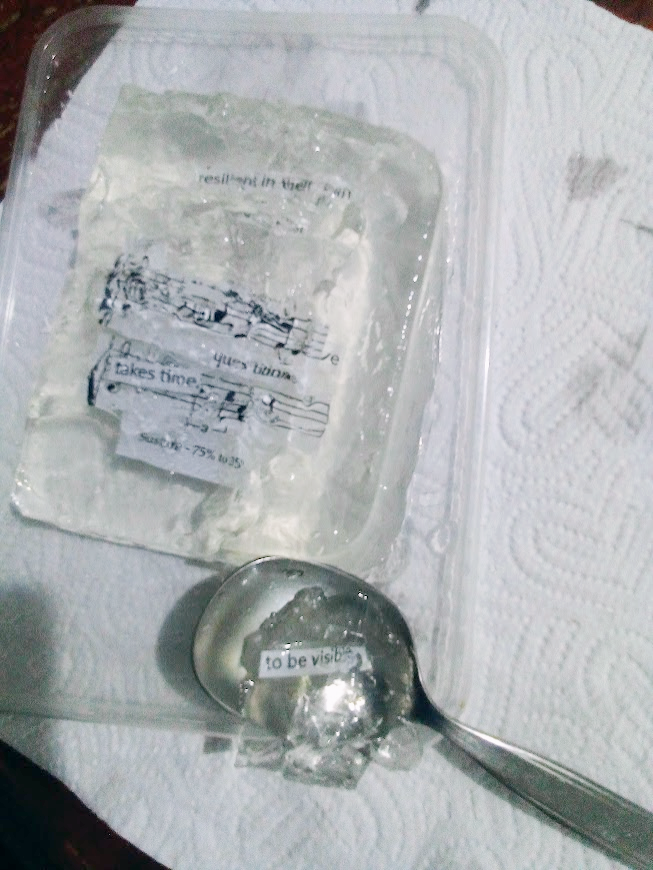
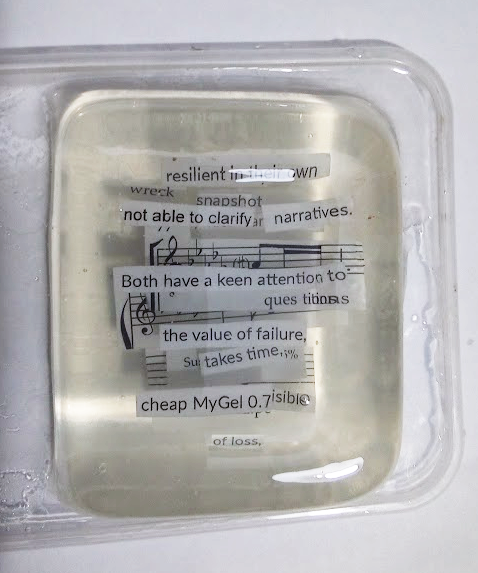
A physical and browser poem that isolates the commas in José García Villa’s “I, it, was, that, saw,” and transfers their coordinates through a stencil into mung bean sprouts on black gulaman. The germinating punctuation turns Villa’s cultivatory image into a temporary domestic response to agricultural and water anxiety around the developing 2026 El Niño; the interface lets readers fade between the source punctuation and its living transfer.
2026
Hauntotechnics
research
writing
intermedia
Artem Research Collective · Zine 3
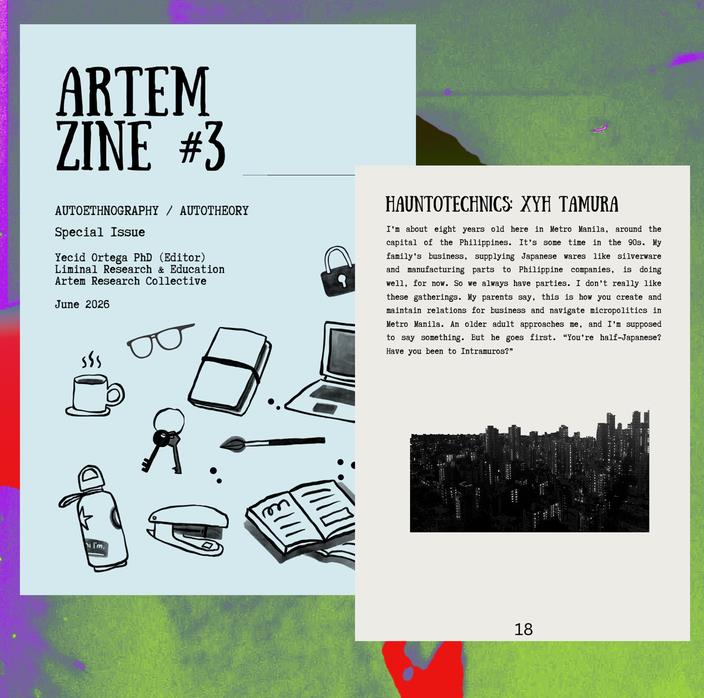
An autotheoretical essay arguing that haunting is produced jointly by cultural memory and technical mediation. Filipino multo, Japanese yūrei, vaporwave, Hiroshima, U.S.–Philippine colonial memory, and Ringu show ghosts taking form through specific bodies, rituals, media systems, infrastructures, and habits of recognition; hauntotechnics names that mutual modification.
2026
No-Clip Gothic: 3D Rendering and the Uncanny of the Postwar American Spatial Order
research
media studies · architectural uncanny · working paper
A paper investigating the shared manufacturing logic of postwar American commercial architecture and real-time 3D game engines. Postwar spatial production (standardized suburban housing, enclosed shopping malls, office parks) and real-time level design both assemble extensive environments through modular, repeatable assets instanced across coordinate grids. Liminal horror (the Backrooms) emerges from this historical convergence, introducing conflation without resolution: holding open opposing registers of physical reality and digital simulation without forcing a choice between them.
2026
Medieval Retentions in Modern Physics: Law, Impetus, and Cosmic Harmony
research
history & philosophy of science · medievalisms · working paper
An inquiry into how conceptual structures formed in medieval natural philosophy and late scholasticism continue to operate in modern physics after their theological foundations have been set aside. Across three distinct lobes, the paper traces how the language of natural laws retains Francisco Suárez's late-scholastic lex artificiorum as an artisan's norm-and-deviation model; introductory mechanics continually encounters student impetus preconceptions; and contemporary theoretical physics perpetuates quadrivial expectations of mathematical harmony between mind and cosmos.
2026
Composition Without Audition
research
research-art
electroacoustic music theory · acoustic epistemology · working paper
A paper arguing that computational specifications of physical acoustics can be complete as musical compositions without entering phenomenal audition. Where electroacoustic theory historically privileges perceived sound-shapes, computational physical models (such as waveguide dimensions exceeding atmospheric acoustic cutoff) remain mathematically determinate across planetary scales, geologic durations, and stratified media, framing code as an inspectable proposition whose audible realization is contingent rather than constitutive.
2026
Biomemristor as Instrument
research
research-art
electronic music · history of science · working paper
A paper reconstructing the biomemristor as a scientific and artistic object following replication disputes over memristive behaviour in Physarum polycephalum. Tracing the concept across theoretical definition, physical thin films, and biological computing, the paper presents a performable comparison between Leon Chua's charge-controlled memristor and parallel RC models, extending the comparison into vocal processing where frequency bands abrade a shared resistance substrate.
2026
Practice Sharing III
research
research-art
Journal for Artistic Research · Language-Based Artistic Research Group
A practice sharing on treating language as material shaped by bodies, histories, interfaces, and modalities. Examples from web literature, code, sound poetry, installation, and performance scores trace a shift from using media to present language toward using each medium as a compositional system that changes it.
2026
Cornice
intermediagames
A browser-based poem, art game, and ASCII terrarium set on a nocturnal balcony above an impossible city. WASD movement, inspectable textual specimens, movable objects, randomized vistas, changing weather, and a reactive sound engine make the terminal window behave as a small ecology.
2026
Biopsy
theaterwriting
An experimental play set in a pandemic-era biopsy room where three forgotten tumors—Glioblastoma, Meningioma, and Hematoma—become conscious and perform the roles of doctors, patients, administrators, and staff. Their biomass grows into a hospital of flesh, wires, mold, and paperwork; medical realism, bureaucratic absurdity, and body horror model how care, debt, migration, and public health assign people to institutional roles.
2026
Cytophone
techintermediagamesresearch-art
A family of browser instruments in which animated 2D bodies are both interface and sound source. Size, geometry, motion, contact, pressure, tension, or environmental data control each instrument's synthesis and spatialization; users play them by seeding, striking, bowing, plucking, dragging, or disturbing the simulated ecology.
understory
A percussion environment where visual cell bodies act as membrane resonators to produce gong-like strikes shaped by size, drift, and collision.
halocline
A fluid acoustic environment where live marine data such as wave height, period, and current velocity directly dictates the harmonic detuning, spectral tilt, and resonant breathing of floating cellular bodies.
xenalloy
A modal-synthesis instrument that generates glass-metal clusters by mapping acoustic traits to nonliteral visible properties like lightness, jaggedness, and hue.
cambium
A playable connective graph where drawing and plucking fibers translates structural tension, friction, and topological strain into string and reed-like sounds.
seismocyte
A generative geological interface that translates real-time global tectonic data into bathyal sub-harmonics and physical collisions.
murmuration
A flocking simulation that generates a shimmering network of oscillator pings through proximity and collisions, actively tuned by live atmospheric conditions.
stomata
A pressure-sensitive aerophone colony of pore-like entities that exhales autonomous, randomized breathing sounds governed directly by live weather data.
2026
Glossolalia
techintermediagames
A browser-based formant-synthesis instrument in which drifting IPA glyphs act as sounding bodies. Position in vowel space controls a vocal-tract model that produces speech-like syllables without resolving into language.
2026
FrameSmear
tech
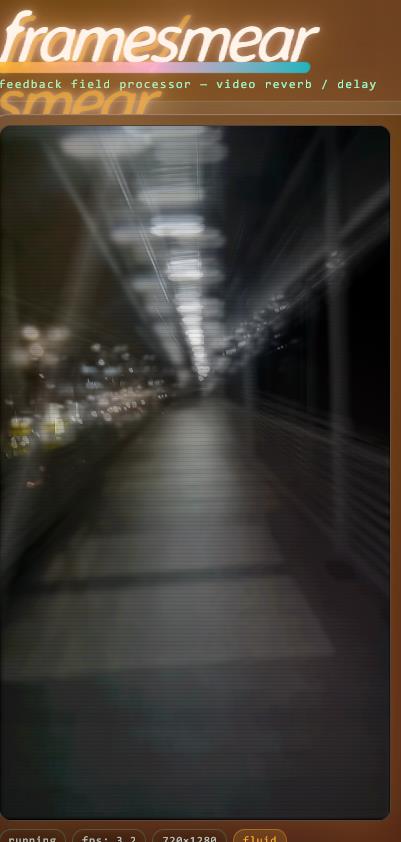
A browser-based video feedback processor for frame accumulation, motion smear, and video reverb. Controls govern memory decay, opacity, drift, zoom, rotation, chromatic split, edge inscription, brightness persistence, and softening; results can be previewed, captured, or exported.
2026
xyhnthesizer
tech
A specialized Kontakt vocal-organ virtual instrument built entirely from custom, self-recorded vocal samples and custom script controls.
2026
Electropond
techintermediagames
A browser instrument in which moving plankton drive FM synthesis through color, collisions, and rippling microtonal fields.
2026
Ganymede
tech
A WebGL image warper that applies animated noise fields, lens distortion, chromatic offset, seamless tiling, and hue or saturation shifts to uploaded images. Live microphone input can modulate the field.
2026
Critterances
design
A procedural sound engine that generates chirps, murmurs, droplets, and filtered grains for imaginary creatures. It maps robot states such as thinking, transcribing, and crafting to distinct vocal behaviors, and also runs as a standalone browser toy.
2026
Naughty Maids
score
short film · music composer
Composed for a short film that incorporates cleaning materials as sound sources, blending Southern California influences with modern orchestration.
Won Best Pilot Script at The Comedy Film Festival (Austin, Texas) and Official Selection at the HollyShorts Film Festival (Glendale, California).
2026
Open Play Assembly 2
music
voice & keyboard synthesizer · with bower gra! & blend.earth · organized by Joee Mejias
Live free improvisation performance.
2026
Dungeon Synth as Transcultural and Transtemporal Construction: Synthetic Medievalisms
research
Confound the Time: Reception in Medieval & Early Modern Studies · academic conference presentation & paper
A paper treating dungeon synth as mediated world-building rather than a revival of medieval music. Its synthetic medievalism is assembled from Norwegian black metal, American and Japanese game music, early MIDI and sound chips, fantasy literature, tabletop games, zines, pixel art, and online genre formation; the genre returns to late-twentieth-century media that had already converted the medieval into fantasy.
2025
Stitcher
tech
A browser and Windows utility that concatenates files into one searchable .txt while preserving each source path, size, type, and delimiter.
2025
72 Munting Panahon
research-artintermedia
An interactive web timeline and timekeeper presenting a Filipino adaptation of the Japanese 72 microseasons (七十二候).
2025
Eosforos as xyhtochrome
intermediamusictech
Diana Aviado's Kaos Magick · with Tusa Montes (Saronay, Kulintang, Tambi)
An intermedia project exploring the primordial Hadean eon through atonal music, custom tech, generative video, and live audiovisual performance. Queers the idea of the stable sun by drawing on the physics of unstable plasma and early earth and moon formation.composer, performer, tech
Init
Digital-organic soundscape from manipulated '90s and Y2K OS startup sounds, linking primordial creation to digital initialization.
Roil
Starts with the synthesizer palettes of Dungeon Synth but subjects them to with atonal, arrhythmic, spectral, and microtonal principles. culminates in a noisy climax featuring processed samples of Filipino indigenous instruments (Saronay, Kulintang, Tambi).
Theia
Voice, synth, and drum piece sung from the perspective of the colliding protoplanet Theia — microtonal melody, guttural vocalization, voice-electronic hybridization.
Selected for The Wrong Eclipse · The Wrong Biennale · online, 12 August 2026 · curated by David Quiles Guilló
Hadean Flare tech
Browser-based WebGL generative visualizer and live tool: an audio-reactive noise field driven by a fully configurable gradient system.
Antemelos tech
Antemelos is a hertz-native, scale-free melody generator for creating monophonic vocal lines that remain singable while sounding unstable, primordial, and unresolved. Built as both an Eosforos instrument and a Tabota emitter, it treats `.tabota` as the lossless home for continuous pitch contours, with MIDI as a secondary projection..
Roil tech
Oscillator with aperiodic noise modulations.
2025
Tanim-Kalye
research-artparticipatoryintermedia
Quezon City Biennial · with Krus na Ligas residents, the LGU & UP Institute of Biology
A research-art and poetry installation that reimagines the street map of Krus na Ligas as a living plant assemblage. Roads recreated from color-inverted images of local flora, printed on acetate and suspended over a window — cyanotype-like glyphs, lightboxes, talismans, x-rays of unseen city blocks.
Exhibition Notes
Wrote the exhibition text for Ang Paglaho ng Bagong Mundo sa mga Araw ng Nakaraan. art writer
2025→
Open4
intermediafilm
Open4 is built from the transitional footage in archival gay adult media from the 1980s to the mid 00s. That range is the VHS era, and tape is what made this material privately accessible before internet distribution. What survives from it are shots of environments, empty rooms, or shots of objects. These are the places the era happened in, recorded incidentally, usually as transitions or setting-establishing shots. In the film, these shots are looped and prolonged, discarding shots with people in it. This transforms the footage into ambient, liminal environments instead of being a film to focus on. It holds the silences, anticipations, disappearances, and longing of queer life and queer temporality.
2025
Walang Orasan Sa Bahay na Ito
scoreintermedia
live score for a short film by Bea Mariano · live scorer, sound artist, composer, writer, vocal performer
A live score performance integrating sound art, music, and vocal performance. Digital vocal pieces, field recordings, microsound, and ambient music.
Kuliglig
An audio poetic monologue.
2025→
Insulae Incognitae
intermedia
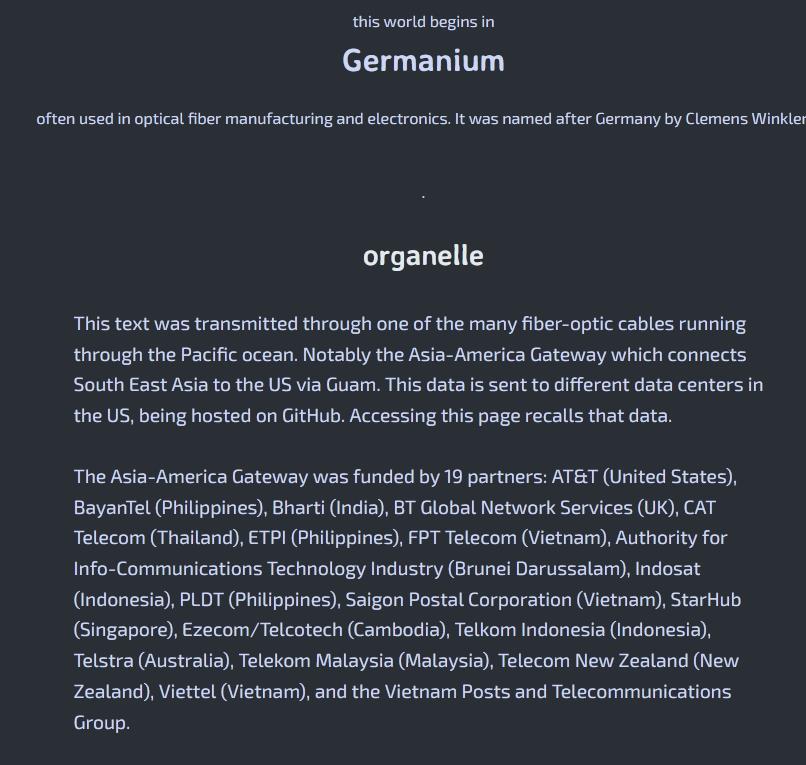
A media art algorithmic poem generating an archipelago based on special Unicode characters and scripts of cultures with precolonial contact with Manila.
proposal for (an)other history — 98B Collaboratory, 2025
Physical installation with Orange Pi and monitor. Curated by Dayang Yraola.
2024–25→
Manifest
intermediascorefilm
[ short film / live score still ]
with Bea Mariano · live score
A short film and videopoem made with Bea Mariano, accompanied by my live score. It stitches the wreck of the USS Samuel B. Roberts, Manila construction sites, archival photographs, handwashing footage, microorganisms, and ocean imagery to examine how American military history remains embedded in Philippine development. The title connects cargo records, apparitions, futures made material, and manifest destiny; construction workers rotated sideways become divers moving through the same Pacific archive.
On The Verge — WHYNoT, 2025
Of Echoes & Currents — Immersive Art / Search Mindscape Foundation, 2024
2025
The Indeterminate Turn: Characterizing a Type of Poetic Experience Across Media
research
intermedia poetics · essay
A paper naming a type of poetic experience that recurs across videopoetry, poetic film, and conceptual art, and characterizing it as the indeterminate turn. Starting from Tom Konyves’s videopoetry manifesto and Brandon Gass’s account of poeticism in cinema, it argues the effect depends on juxtaposition that suggests rather than illustrates — image, text, and sound that decline to restate each other — and works through the volta, compression, affordance, the vanitas and Magritte, cliché, surprise, and non-narrativity to locate where the turn happens.
2025
Qualia’s Barber
research
philosophy of mind · essay
An essay arguing that qualia are artifacts of partial attention. Reading Russell’s barber paradox against introspection, it holds that reporting an experience needs attention left over to report with, so the states of full absorption described in Zen and Dzogchen — shikantaza, rigpa — dissolve the observer that would do the reporting; and treating the noticing as part of the experience opens a recursion of being aware of being aware that settles at no particular level.
2025
The Liquid Mind
research
philosophy of mind · essay
An essay arguing that a mind moves between integration and fragmentation rather than holding to either. Dissociative identity disorder, split-brain cases, and alien hand syndrome are read against Hilary Putnam’s anti-nesting principle, which holds that a conscious organism cannot have consciously experiencing parts; mental liquidity proposes coherence and separation as states a mind shifts between under internal and external conditions, with the dissociative cases carrying distinct neural signatures rather than only distinct reports.
2025
From Interiority to Interaction: Reframing Personhood, Communication, and Affect with Artificial Interaction Partners through Japanese Cultures
research
Philosophy & Digitality · academic paper
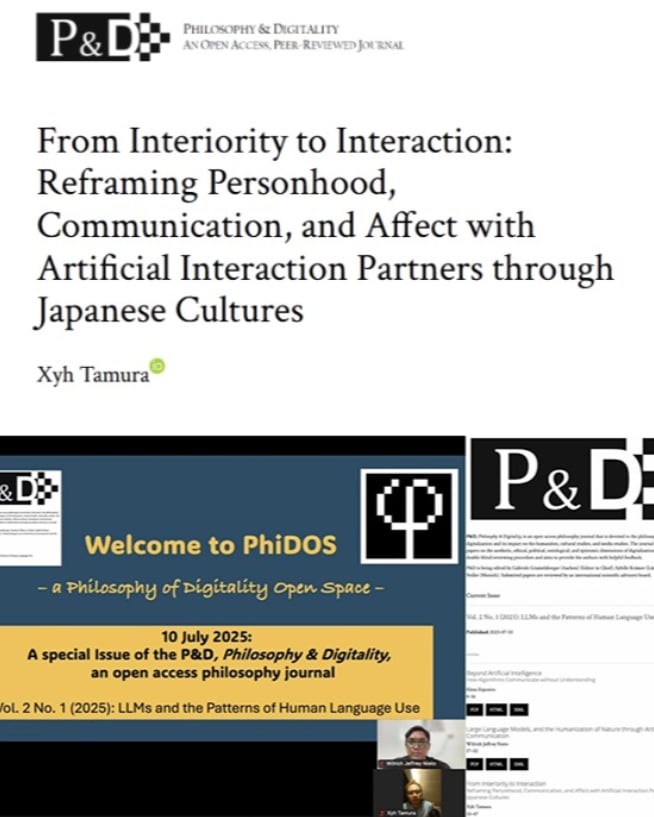
A paper analyzing artificial interaction partners through the social roles they already perform rather than as containers of hidden consciousness. AIBO, android Buddhist figures, companion robots, and LLMs show personhood emerging through communicative affordances involving affect, ritual, kinship, and care; the cases are drawn from Japanese robotics and relational accounts of personhood.
2025
Feeling Together: Affective Circuits and the Relational Self in Philippine Cultures, Beyond Literary Individualism
researchresearch-art
Feeling Formal · Nanyang Technological University · academic and literary/artistic presentation for a workshop on theories of emotion · researcher, participant, presenter
A study of relational accounts of emotion and personhood through Tagalog concepts of loób and kapwa as theorized largely in Metro Manila, participant interviews, literary analysis, and autoethnography. It does not treat these terms as a national Filipino ontology: Hiligaynon, for example, has no direct equivalent of kapwa. Cases involving hiyâ, kilíg, and húgot test how feeling crosses language, ethical judgment, social expectation, perception, and performance.
2025
Piyesta Plaza as Cyberpaean
musicparticipatory
Mono by Phono · conceptualizer, event designer, performer, composer as Cyberpaean
A vaporwave listening and social gathering hosted by Mono by Phono, using archival sound, image, fashion, commercials, and film footage to organize programs around Philippine cultural memory. Sets move among 1990s OPM, 1980s ballads, Martial Law-era disco, Manila Sound, film soundtracks, and folk songs. The project later became Piyesta Plaza 1985–1995 Airwaves, an album and live audiovisual performance about Philippine pop culture, People Power and its aftermath, and the early-1990s earthquakes.
Piyesta Plaza 1985 to 1995: Airwaves
Full-length album and live A/V performance on the 1986 People Power Revolution and the early-90s earthquakes.
2025
Chanidae
intermedia
A web-based slide poem presented through animated text fragments, blue gradients, and subtitle-like placement. Arrow, swipe, and keyboard navigation pace the text across screens associated with water, depth, and disappearance.
2025
LOVE-LETTER-FOR-YOU.TXT
intermedia
An algorithmic poem based on the ILOVEYOU virus, written through its creator's imagined persona and a postcolonial account of internet access and desire. Its words are replaced one by one with ILOVEYOU until the phrase overtakes the text and the poem performs its own viral collapse.
2025
4:43 A.M.
intermedia
A lo-fi spoken-word poem recorded on a phone during an early-morning walk. Breath, footsteps, and traffic hold together a roadside animal death and an eroticized approaching runner, placing observation, fantasy, desire, violence, and complicity in the same field recording.
2025→
KuboCities
intermedia
Serial digital poem with web 1.0 aesthetics.
2025→
Galvanism
intermediawriting
A web-based poetic sequence about body porosity in the 2000s Philippines. A Filipino-Japanese neuroqueer speaker conducts television, dial-up internet, typhoons, political unrest, language, ghosts, floods, and voltage; electricity links nervous sensation to infrastructure, weather, media, and empire.
2025
HuníTsura
tech
Web-based audio visualizer crossfading between two images.
2025
Istorya sang Bȧlatyagon
participatoryresearchintermediatech
Atipan+ General Workshop 2025 · intern, artist-researcher, developer, translator, facilitator
A participatory "Affect Atlas" — a menstrual-awareness workshop method using storytelling, word-image mapping, and performance across Panay and Guimaras. Personal output: a critical essay and digital installation on how humor, mapping, and performance make stigmatized topics discussable while producing qualitative data.
Critical Essay & Installation
Self-reflexive essay, generative affect weaving for data dramatization, and interactive map.
Windesheim Honours College — 2025
Presented for Day of Action for Women's Health.
2025
Where You Were Last Seen
intermedia
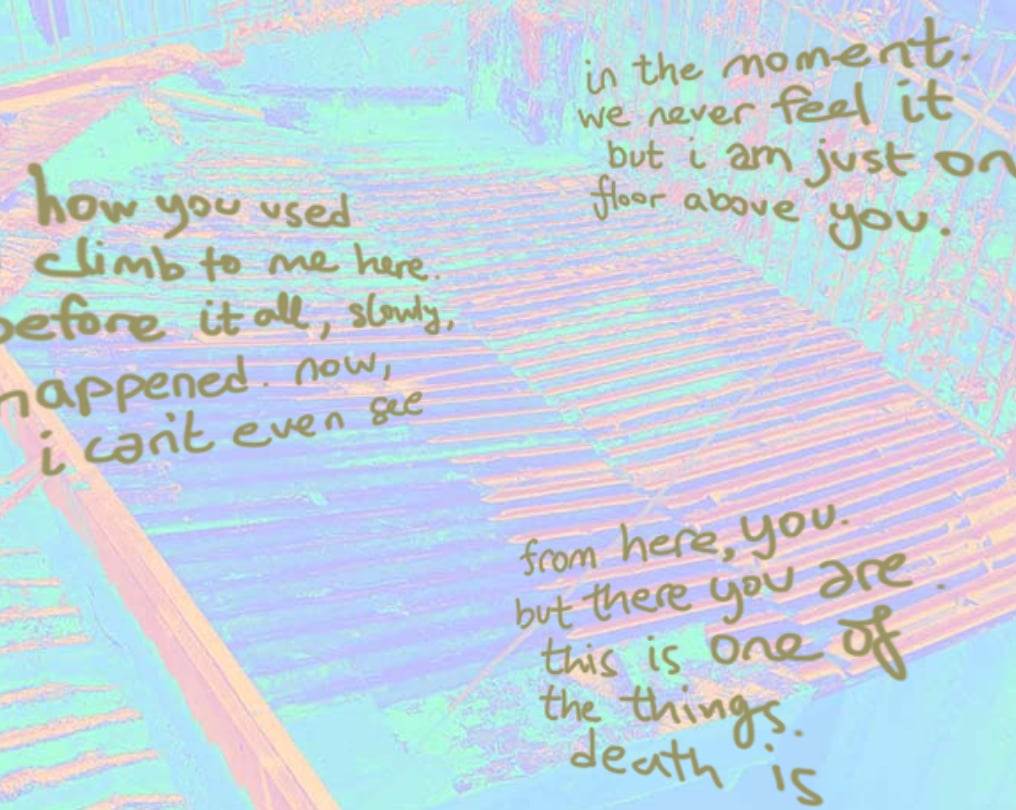
Three textual-visual works combining hand and digital drawing, maps, diagrams, manipulated photographs, poetry, prose, and asemic writing. Police diagrams, scrapbooks, and hand-drawn cartography supply formats for recording disappearance through traces and uncertainty without converting it into death or recovery.
2025→
GaHueMa
tech
A web-based image processing system that reconceptualizes hue as a relational, topological medium. A user-defined anchor hue transforms colors through attraction, repulsion, inversion, compression, and expansion across the color wheel, without touching saturation or luminosity. HSL or OKLCH; CPU or GPU.
2025→
Of Another Shore
intermediafilm
[ image / videopoem still ]
An intermedia suite linking electronic literature, experimental pop, videopoetry, web art, performance scores, and simulations through a decentralized hypertext. Its shore is the present: a boundary where personal, ancestral, geological, virtual, remembered, and speculative times remain adjacent but inaccessible to one another. Individual works use that structure to test how identity and inheritance are assembled across incompatible media and temporal scales.
2024→
Entangled Forests: Women's Climate Action in the Brazilian Amazon and the Philippines
research
The British Academy · researcher
2024
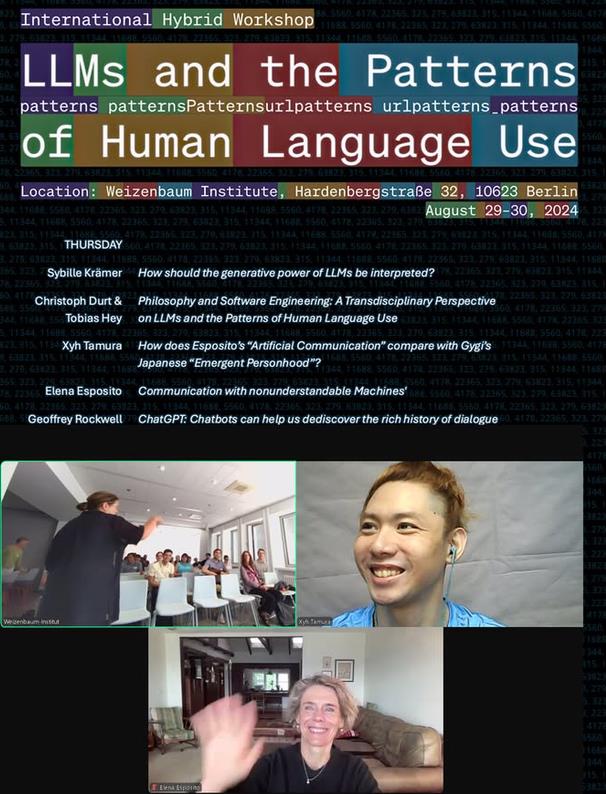
How does Esposito's "Artificial Communication" compare with Gygi's Japanese "Emergent Personhood"?
research
LLMs and the Patterns of Human Language Use · Denkwerkstatt Berlin · researcher, participant, presenter
2024→
Shook
intermediafilm
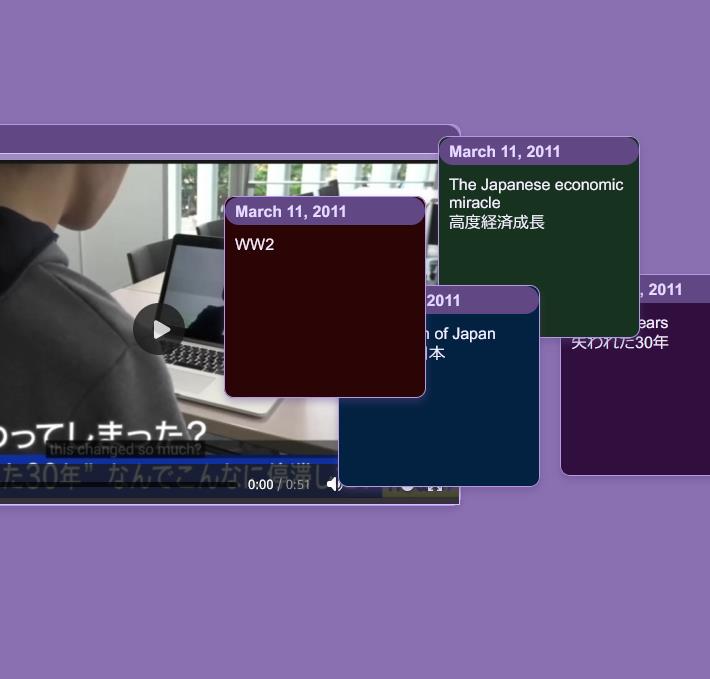
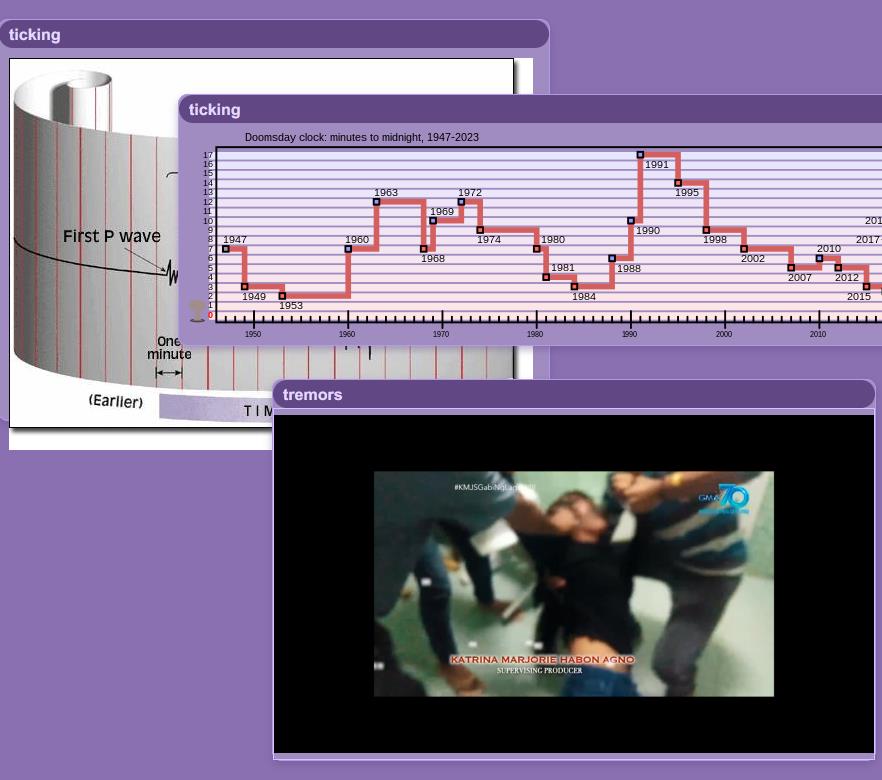
An ongoing suite of electronic literature, videopoetry, docupoetry, and web art about the afterlives of disaster from a Filipino-Japanese perspective. The 1990 Luzon earthquake, 2011 Tōhoku earthquake, and 2020 Taal eruption organize works about the post-Marcos state, Japan’s Lost Decades, the pandemic-era internet, family memory, and inherited trauma. Browser poems, movable windows, archival video, blackout editing, and Windows XP interfaces make each geological rupture a point from which different historical times are read.
2024→
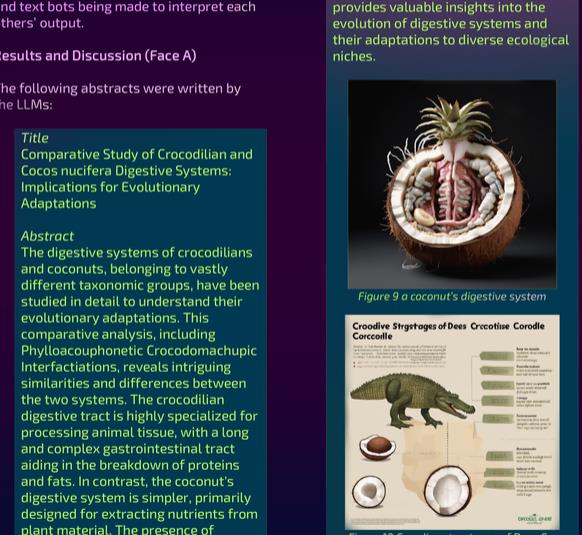
Cybernetic Inquiry into the Urbanomic Linguistics of Coconut Husk Archaeoacoustics: Illuminating Crocodilian Dynamics and Techno-Ethnographic Tellscape Analysis
intermedia
An LLM co-authored hypertext lyric essay presented as a continuously scrolling academic paper. Through recursive writing, footnotes, and AI-generated language, the work examines language, documents, humans, environments, and LLMs as surface-based archives shaped by bias, extraction, historical debris, and collaborative knowledge production.
2024→
Plasticoid
intermedia
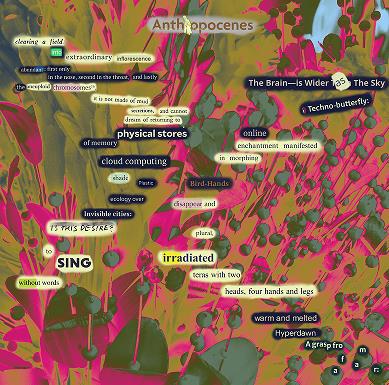
A hypertext collage poem whose images and text fragments link outward to academic papers, public-domain archives, found media, recordings, forums, discarded materials, and commercial packaging. Citation is both structure and subject: the linked fragments model identity as an arrangement of references shaped by academia, plastics, capitalism, globalization, and ecological crisis.
2024
Participatory stakeholder engagement to build a constituency for a proposed Non-motorised transport plan and policy in UP Diliman
researchparticipatorytech
researcher, developer · policy research
Developed the Makwela — a geographical, participatory, and photovoice-driven storytelling method with an interactive map.
2024
Technical-Vocational Education and Training & Lifelong Learning
research
The Second Congressional Commission on Education · documenter, researcher · policy research
2022→
Second Life
virtualmusicvisualfashion
Resident DJ, fashion designer, event coordinator, 3D mesh artist. Curated genre sets (vaporwave, exotica, electro swing, seapunk, EBM, noise) as temporary worlds — designing posters, building sets, changing skies. Plus avatar fashion impossible in physical space: dresses made from floating pearls, leaves, blobs, dandelion particles. Blender · Substance Painter
2021→
Quantum Photonics Club
organizationsci-comm
science advisor, graphic designer, composer, social media assistant
2020→
The Dice Cult
virtualtheatervisualgames
streamer, video and audio editor, music composer, social media assets · actual play TTRPG group
2019
Memory of Jaro
score
music composer, sound designer, sound recordist · documentary
Asó nga Tin-aw
End credits piece built from melodic fragments of Ilonggo folksongs.
2018
Titanopsis calcarea bizarre
fashion
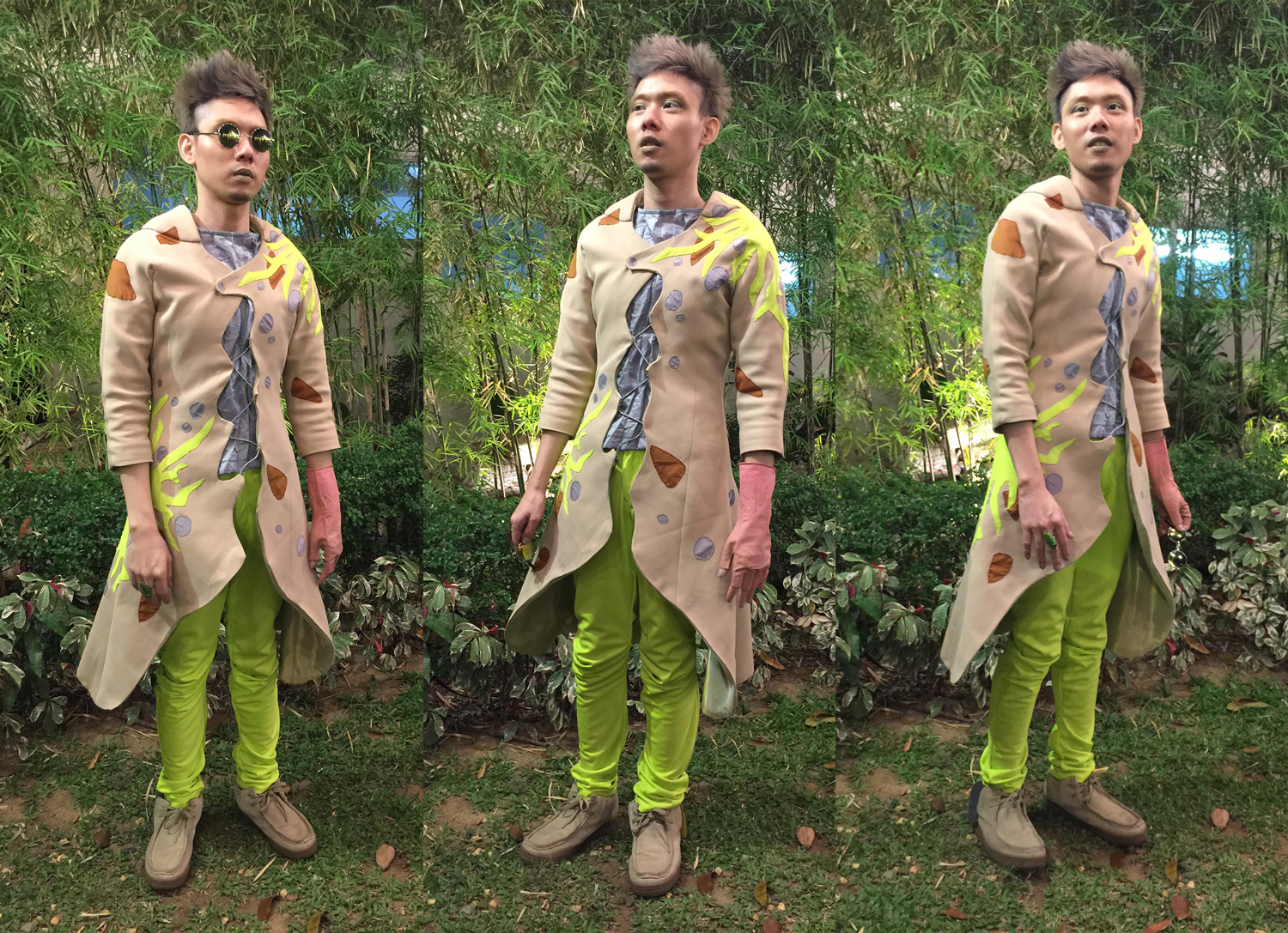
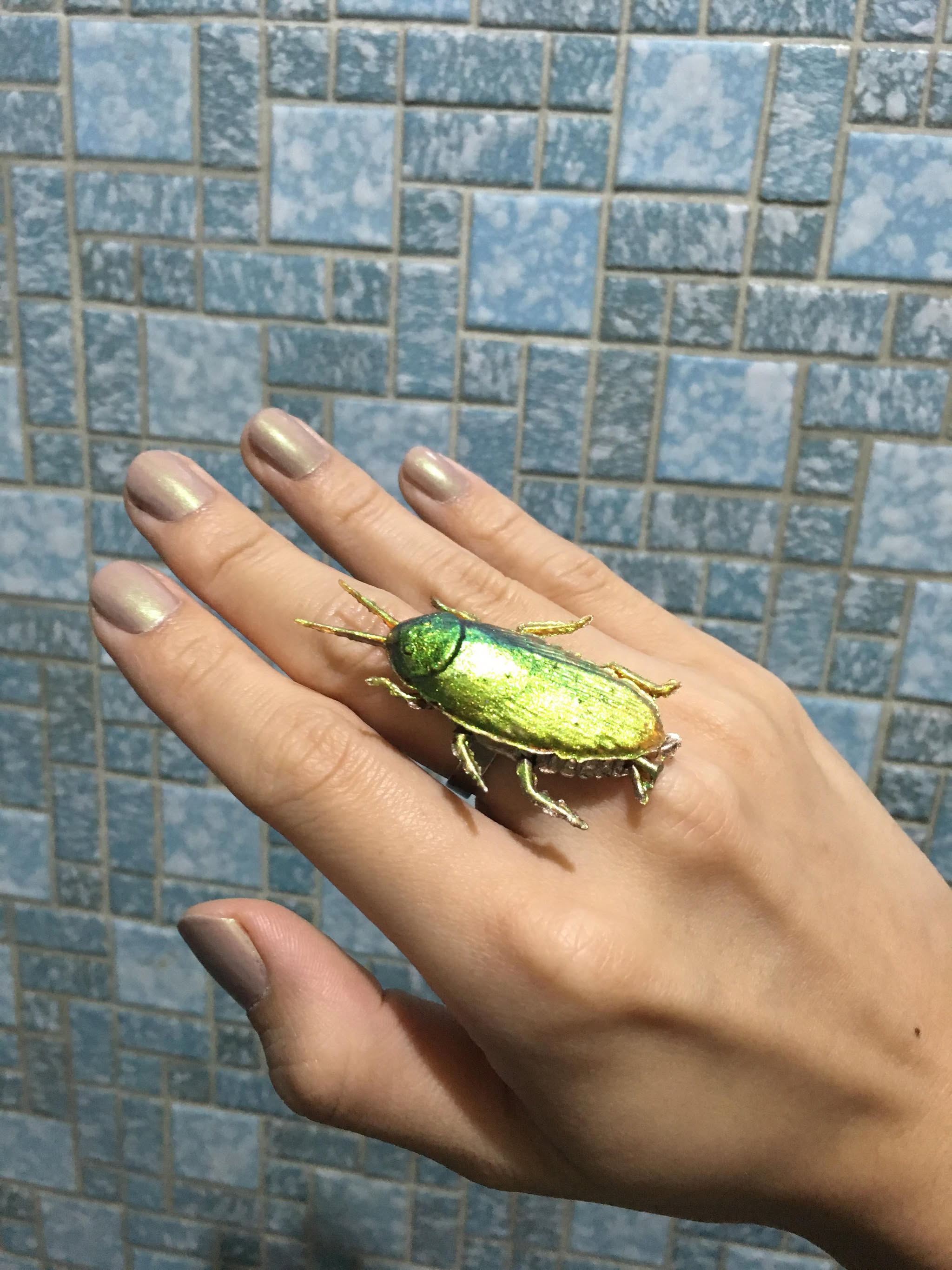
A head-to-toe suite began with beige nail polish with green shimmer and a photograph of stone-like Titanopsis calcarea. Acid green, steel blue, brick red, and greyed beige move across a wavy appliquéd coat, metallic innerwear, neon trousers with asymmetrical folds, hair, makeup, nails, a modified kitchen glove, and an iridescent cockroach ring made from a multichrome-coated plastic toy. Xyh developed the concept, palette, silhouette, sketch, styling, cosmetics, and accessories; George Palmos collaborated on garment design and construction.
2018
Lie
music
A meterless song built from multiplied harp recordings, granular synthesis, ocean field sound, and a voice that distorts into the instrumental field. The siren is treated as a digitally mediated voice whose source cannot be separated from its transmission.
2018
Know Me Do
music
An IDM-pop song combining synthesized kicks, household recordings, musique concrète edits, soft distortion, and a hybrid acoustic-electronic plucked instrument. Its blabber-like lyrics place surveillance inside an unstable field of digital and analog sound objects.
2018
Handaan
score
short film · music composer
A narrative animation score combining gongs, bamboo instruments, and guitars with a contemporary orchestral and electronic soundtrack palette.
Film nominated for Best Director and Best Cinematography at the Las Vegas Filipino Short Film Festival 2025.
2018
Palibut-Libot
score
short film · music composer
A Manila interpretation of neon-noir: a synth-driven soundtrack using field recordings, noise, and rougher textures, moving away from glossy slickness toward something grimier and more unstable.
Awarded Best Short Film at the FilAm Creative Film Festival 2023. Film nominated for Best Editing and Bahaghari / LGBTQ Award at the Las Vegas Filipino Short Film Festival 2025.
2017
Perihelion
music
Electronic experimental chamber pop.
2016
Paludarium
visual
Vector-based self-portrait.
2015
Pacing To as masm+xyh
musicvisual
Crooked Tree Records · lead singer, music composer, producer, mixing & mastering, album artist
A six-track synthpop and vaporpop EP made with Brazilian artist MASM, combining industrial music, bossa nova, trap EDM, eurodance, R&B, and minimalism through deliberately degraded playback. I co-wrote, sang, produced, mixed, mastered, and designed the album art, combining 3D and vector graphics with paper, VHS, and digital damage.
2014
Hyacinth
music
A total-serial song setting a shrill head-voice melody against a repeating synthesizer loop in 7/4.
2013→
Freaks in Clothes
fashion
Tumblr blog for experimental menswear.
2013
Pin
music
Odd-meter shoegaze/dream pop with reggae elements.
2013
Lupad
music
Skyeye UAV
Instrumental folktronica with orchestral and IDM elements in 5/4.
2013
Fire In The Head
music
Experimental chamber pop.
2013
Collecting Amber / In Vinyl
writing
Re.Doubt 2 · Belfort and Bastion Publishing · contributing author · fiction
2012
Untitled 4
writing
High Chair, Issue 16 · contributing author · poetry
2011–2015
Tao Aves Band
music
keyboards, secondary vocals, arrangement
2011
Hey Ophiuchus
writingsci-comm
Filipino Freethinkers · contributing author · non-fiction, science writing
2010/2019
FF Podcast
score
Filipino Freethinkers · music composer · introduction music
2009
Ave Maria, Gaia Mystica
scoremusic
music composer & glass harp performer · concert with audiovisual sections
Music composed from non-human nature sounds.
2009
Meiosis
music
Asian Composer's League
Instrumental electronic music based on simple waveforms, Philippine gongs, and vertical composition.
1999
The Magic Staff as Cy Tamura
theatermusicwriting
Meralco Theatre · librettist, songwriter, lead actor
A full-scale musical conceived and written at age nine, staged with Fides Cuyugan-Asensio, Bernardo Bernardo, and Monique Wilson.